
ISO 9001 & Export Compliance: Hydraulic Cylinders from China
ISO 9001 & Export Compliance: Hydraulic Cylinders from China
ISO 9001 describes how a hydraulic cylinder supplier manages quality. It does not certify that a specific cylinder will fit your machine. For buyers sourcing industrial hydraulic cylinders from China, that distinction separates a clean first order from a stalled installation, and it sits directly beside the export mechanics that decide whether a small trial shipment is even possible.
Specification sheets from Chinese cylinder factories routinely carry statements of two completely different natures on the same page. A model listing may read ISO 9001 AAA Flat Gate Hydraulic Cylinder, Max Diameter 1200mm. A few lines lower, the same sheet states a minimum order quantity of 1 piece, standard export packaging, T/T payment terms, and shipment from SHANGHAI. The first statement is about a management system. The second is about how goods physically leave the country and reach your dock.
Buyers in the awareness and research stage regularly merge the two into a single vague idea of a certified supplier, and that is where procurement risk begins. This guide separates them: what an ISO 9001 reference in a model designation actually covers, what it does not cover, which product-level standards fill the gap, and how to read the export terms that shape your landed cost and lead time.
The Problem: Why a Quality Management Claim Gets Read as a Product Certificate
Three recurring misreadings create most of the confusion around Chinese hydraulic cylinder compliance documents.
Misreading 1 — treating ISO 9001 as a product certificate. ISO 9001 is a quality management system standard. It addresses how an organization controls design, production, inspection, documentation and corrective action. It does not define bore diameter, stroke length, mounting dimensions, pressure rating or material grade for a given cylinder. Two cylinders can both come from ISO 9001 registered factories and still be entirely incompatible with each other.
Misreading 2 — treating ISO 9001 as a durability guarantee. A functioning quality management system supports repeatability and traceability. It does not by itself guarantee that a cylinder survives salt spray and seawater corrosion on an offshore platform, or mill scale, water splash and heat in a steel mill. Those outcomes depend on specification choices: material, sealing, surface treatment and application data supplied by the buyer.
Misreading 3 — treating ISO 9001 as interchangeable with a product standard. Product-level standards exist precisely because a management standard cannot cover them. ISO 6022:2006, for example, establishes mounting dimensions for single rod hydraulic cylinders (250 bar series) to ensure interchangeability. That is a dimensional and interface document. It answers whether a replacement cylinder bolts into the same place. ISO 9001 answers something else entirely.
Practical rule for research-stage buyers: read every compliance line on a Chinese cylinder quotation and ask which of the two categories it belongs to — the organization, or the product. If the line names a standard number, note it. If it only says ISO 9001, you still need the product-side answer from a drawing, a datasheet or a sample.
Industry Background: Why Compliance Questions Concentrate on Chinese Supply
The hydraulic cylinder market was valued at approximately USD 15.7 billion in 2024 and is projected to reach USD 24.7 billion by 2034, according to Global Market Insights. Published estimates vary between research firms partly because some figures include related hydraulic components rather than pure cylinder sales, so the absolute number matters less than the direction and the regional concentration.
That concentration sits in Asia. Asia Pacific dominated the hydraulic cylinder market with a revenue share of 40.5% in 2025, driven by rapid industrial automation, according to Grand View Research. Buyers in Europe, North America and the Middle East therefore deal with Asian supply as a structural reality rather than an exception, which is why compliance documentation has become part of routine procurement instead of a special case.
Changzhou in Jiangsu Province functions as a visible hub for large-scale hydraulic engineering. A record-breaking hydraulic cylinder for marine piling with a maximum push of 5,000 tons was unveiled in Changzhou, China, as reported by Research Nester — a useful marker of the technical depth present in the regional supply base.
Changzhou Hydraulic Complete Equipment Co., Ltd. (brand name CZHydraulic) is a hydraulic equipment manufacturer headquartered at No. 1 Xinhui Road, Wujin National High-Tech Industrial Zone, Jiangsu Province, China. Established in 1990 with more than 35 years of experience, the company manufactures complete sets of hydraulic hoist equipment, industrial hydraulic cylinders and their control systems, servomotors, thermal spraying and surface treatment services. Export business accounts for 40% of total sales, with major markets in North America, South America, Western Europe, Eastern Europe, Eastern Asia and Southeast Asia.
That export exposure is the reason the company's listings carry both types of statement. A supplier shipping 40% of output across six regional markets has to answer compliance questions from buyers who operate under different rules, and it has to do so on a product page where space is limited.
What ISO 9001 Means Inside a Product Model Designation
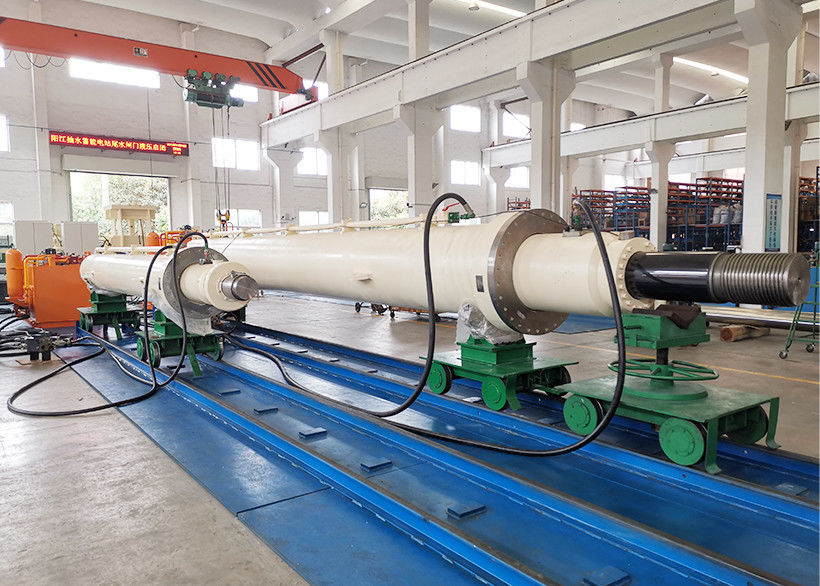
Chinese suppliers frequently embed compliance signals in the commercial product name so that the listing stays searchable for buyers who type compliance terms. The flat gate example is typical. The product is a hydraulic cylinder with model number QPPY, sold under the brand name CZHydraulic, built as a piston cylinder structure with hydraulic power and a steel body. It is a flat gate type cylinder listed with a maximum diameter of 1200 mm and a stroke of 16 m, intended for industrial, water conservancy project, vehicle and machinery equipment applications.
The ISO 9001 reference in that designation points to the quality management system under which the cylinder line is produced. It is not a dimensional certificate for the individual unit, and it does not replace the maximum diameter and stroke figures that appear beside it. Those two engineering figures are the product-side facts; the ISO 9001 reference is the organization-side fact.
Two other cylinder lines state the standard explicitly rather than embedding it in the name, which is more transparent and easier to audit:
- QHSY — the Electric Single Acting Hydraulic Cylinder Deep Hole Radial Gate For Tower Crane, classified as a hydraulic hoist winch and a miter gate hydraulic hoist, lists Standard: GB/T9001-2000, IDT ISO 9001:2000.
- QHLY — the miter gate hydraulic hoist type cylinder in the large bore hydraulic cylinders category, also used in the radial gate heavy duty hoist cylinder line, lists Standard: GB/T9001-2000, IDT ISO 9001:2000.
In standards-adoption notation, IDT indicates identical adoption of the source standard text. GB/T 9001-2000 therefore appears alongside ISO 9001:2000 as an identical national adoption. ISO 9001 itself has been revised several times since that edition was published, so the practical follow-up question for a buyer is which edition a supplier's current certificate actually covers, and whether the certificate scope names the manufacturing site that will produce the order. Separately, the thermal spray ceramic rod industrial hydraulic cylinder for container transport lists Certification: ISO under the brand name Magic Power.
What the management system is expected to produce
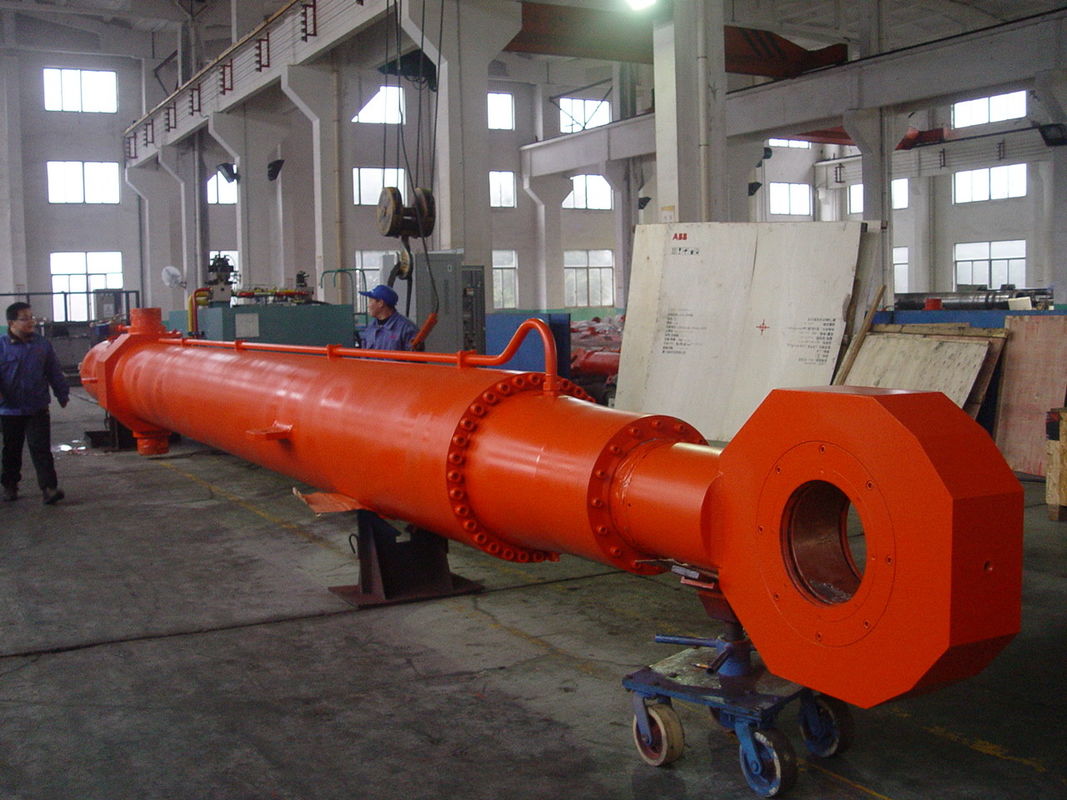
A quality management claim becomes credible when the physical operation behind it can be inspected. Changzhou Hydraulic Complete Equipment Co., Ltd. employs approximately 316 staff, including an R&D team of 20 engineers, operates a manufacturing facility covering 10,000㎡, and reports an annual production capacity of approximately 120,000 units. The recorded production and quality infrastructure includes CNC horizontal lathes, CNC machining centers, a moving column gantry five-sided machining center, an American Shanneng honing machine, a metalworking workshop, and a comprehensive testing platform for hydraulic systems.
For a buyer, that equipment list is more informative than a certificate PDF. Honing equipment, five-sided machining capability and a dedicated hydraulic testing platform are the physical conditions under which consistent bore geometry, sealing surfaces and pressure integrity are actually produced. When you audit a supplier, ask to see the machines and the test bench operating, not only the certificate binder.
What ISO 9001 Does Not Cover — and What Fills the Gap
Once the management claim is separated from the product claim, the remaining specification gaps have to be closed explicitly. Four categories matter most for industrial hydraulic cylinders.
Product and interchangeability standards. Mounting dimensions, rod diameter and interface geometry belong to product standards such as ISO 6022:2006, or to the buyer's own drawing. If a replacement cylinder must bolt into an existing installation, this is the document to check.
Materials. The cylinder body is made of steel, specifically carbon, alloy or stainless steel. The choice is not cosmetic. Offshore and marine duty, metallurgical duty and water conservancy duty pull the material decision in different directions, and the selected grade should appear on the order confirmation rather than only in a general catalogue statement.
Surface treatment. The company's service scope includes thermal spraying and surface treatment, with product lines covering ceramic coating piston rods and HVOF rods. Rod surface condition is one of the main determinants of seal life in corrosive and abrasive environments, so the treatment route should be specified together with the rod material.
Application-specific requirements. These come from the working condition, not from a management standard. Marine and offshore cylinders operate in salt spray, high humidity, seawater corrosion, heavy load and shock conditions, requiring high corrosion protection and reliable sealing, with IP67 sealing listed as a special requirement. Metallurgical cylinders work under high temperature, heavy load, shock, dust, scale and water splash with frequent operation and strong vibration, requiring heat resistance, shockproof and reliable performance, also with IP67 sealing listed. Water conservancy cylinders must withstand water impact and vibration, maintain pressure stably, and realize synchronous control and emergency operation, with good sealing, anti-cavitation and corrosion resistance under conditions that include particle wear, oil emulsification and excessively high oil temperature.
Step-by-Step Breakdown: Verifying Compliance and Export Terms
The following sequence works for a first-time order as well as for a repeat project, and it can be completed from documents plus one factory conversation.
Step 1 — Sort every compliance line into organization or product. Write two columns on your comparison sheet. ISO 9001, GB/T9001-2000, IDT ISO 9001:2000 and Certification: ISO go in the organization column. Maximum diameter 1200 mm, stroke 16 m, operating pressure range 0.2-1.0 MPa, materials and mounting data go in the product column. Any product column left empty means you still have an open question.
Step 2 — Fix the exact model designation. Chinese cylinder ranges use short model codes that map to specific gate or machine types. QPPY denotes the flat gate type cylinder. QHSY denotes the electric single acting deep hole radial gate cylinder for tower crane. QHLY covers the miter gate hydraulic hoist and radial gate heavy duty hoist cylinder lines. QPKY denotes the plane rapid gate double acting cylinder. Using the wrong code in a purchase order is a real risk, because the codes carry different structures and applications.
Step 3 — Verify certificate scope and edition. Ask which ISO 9001 edition the current certificate covers, which legal entity holds it, and which manufacturing address is named in the scope. Confirm the address matches the facility that will produce your order — in this case, No. 1 Xinhui Road, Wujin National High-Tech Industrial Zone, Jiangsu Province. A certificate that names a different site or a different entity does not describe your supplier.
Step 4 — Translate your working condition into special requirements. Use the application data, not adjectives. Offshore platform and marine equipment hydraulic system projects point to salt spray, humidity, seawater corrosion, heavy load and shock with IP67 sealing. Steelmaking and rolling operations point to high temperature, dust, scale and water splash with heat resistance and shockproof performance. Water gate hoist projects point to high pressure, heavy load, intermittent 24/7 operation with frequent starts and stops, plus synchronous control and emergency operation capability.
Step 5 — Confirm material and surface treatment route. State carbon, alloy or stainless steel explicitly, and state the rod treatment — thermal spraying, ceramic coating or HVOF. These are the line items most likely to be assumed rather than written down.
Step 6 — Lock the commercial terms. Confirm minimum order quantity, packaging, payment terms, delivery window, port of loading and supply capacity. On the listed cylinder lines these read: MOQ 1 piece, standard export package, T/T payment, delivery 15 to 60 days depending on product type, port SHANGHAI, and supply ability of 2,400 tons per year for most lines.
Step 7 — Keep one identifier across all documents. The model designation should be identical on the purchase order, the proforma invoice, the packing list and the nameplate. Divergence between documents is the most common cause of customs questions and of receiving a cylinder that does not match the drawing you approved.
How the Export Terms Actually Work: SHANGHAI, Packaging, MOQ 1, T/T
Export compliance is not only about certificates. It is also about the commercial mechanics that determine whether you can test a supplier before you commit volume.
Minimum order quantity of 1 piece
A minimum order quantity of 1 piece is listed across the cylinder lines described here. For an engineering team, that changes the procurement sequence: a single unit can be ordered for fit, function and sealing validation before any volume commitment. The trade-off is unit economics — freight, export documentation and production setup are spread over one unit instead of a container load, so the per-piece cost of a trial order is naturally higher than the per-piece cost of a repeat order.
Standard export packaging
Standard export package is the stated packaging for these lines, covering bore protection, rod protection and sea-freight handling. For large-bore long-stroke cylinders, packaging interacts with transport geometry, so the packaging specification should be confirmed together with the shipping method rather than after the order is placed.
T/T payment terms
T/T — telegraphic transfer — is the stated payment term across the listed lines. For first orders from a new supplier this places documentation discipline on both sides: the proforma invoice, the bank details, the model designation and the inspection documentation all need to agree before funds move.
Port of loading and delivery window
The port of loading is SHANGHAI on the standard lines, with TIANJIN listed as an additional option on the thermal spray ceramic rod industrial hydraulic cylinder for container transport. Delivery time is 15 to 60 days depending on product type. Supply ability is listed at 2,400 tons per year for most lines and 15,000 tons per year for the QHSY line, which is the relevant figure when you are planning a multi-unit project rather than a sample.
Use Cases: Where Compliance Documents Decide the Project
Water conservancy and hydropower hoists (China, and comparable markets). Here the cylinder opens, closes, positions and locks hydraulic gates, supporting flood control, water storage and flow regulation. The matched equipment set is a hydraulic cylinder plus hydraulic system plus electrical control system. The cylinder operates outdoors or underwater in humid, sandy conditions, must withstand water impact and vibration, maintain pressure stably, and support synchronous control and emergency operation. The documented risks in this duty are particle wear, oil emulsification and excessively high oil temperature — three items that belong on a compliance checklist because they are failure modes, not preferences.
Offshore platform and marine equipment hydraulic systems (Singapore and regional marine markets). Marine and offshore cylinders operate in salt spray, high humidity, seawater corrosion, heavy load and shock conditions, requiring high corrosion protection and reliable sealing, with IP67 sealing listed as a special requirement. Operation is 24/7 intermittent or continuous, and the matched equipment includes marine cranes. Compliance here means the sealing class, the rod treatment and the material grade are all documented, because an ISO 9001 certificate alone will not tell you whether a rod survives a salt-laden atmosphere.
Metallurgical plants (United Arab Emirates and comparable markets). Metallurgical cylinders serve steelmaking, continuous casting and rolling mills. They work under high temperature, heavy load, shock, dust, scale and water splash with frequent operation and strong vibration, and the requirements are explicitly heat resistance and shockproof reliable performance, with IP67 sealing listed. The matched equipment is the hydraulic system itself, and operation runs 24/7 intermittently. For this duty, the specification conversation should be about sealing, heat exposure and maintenance intervals — again, the product column of your checklist.
Comparison Table: Compliance and Export Terms as Listed
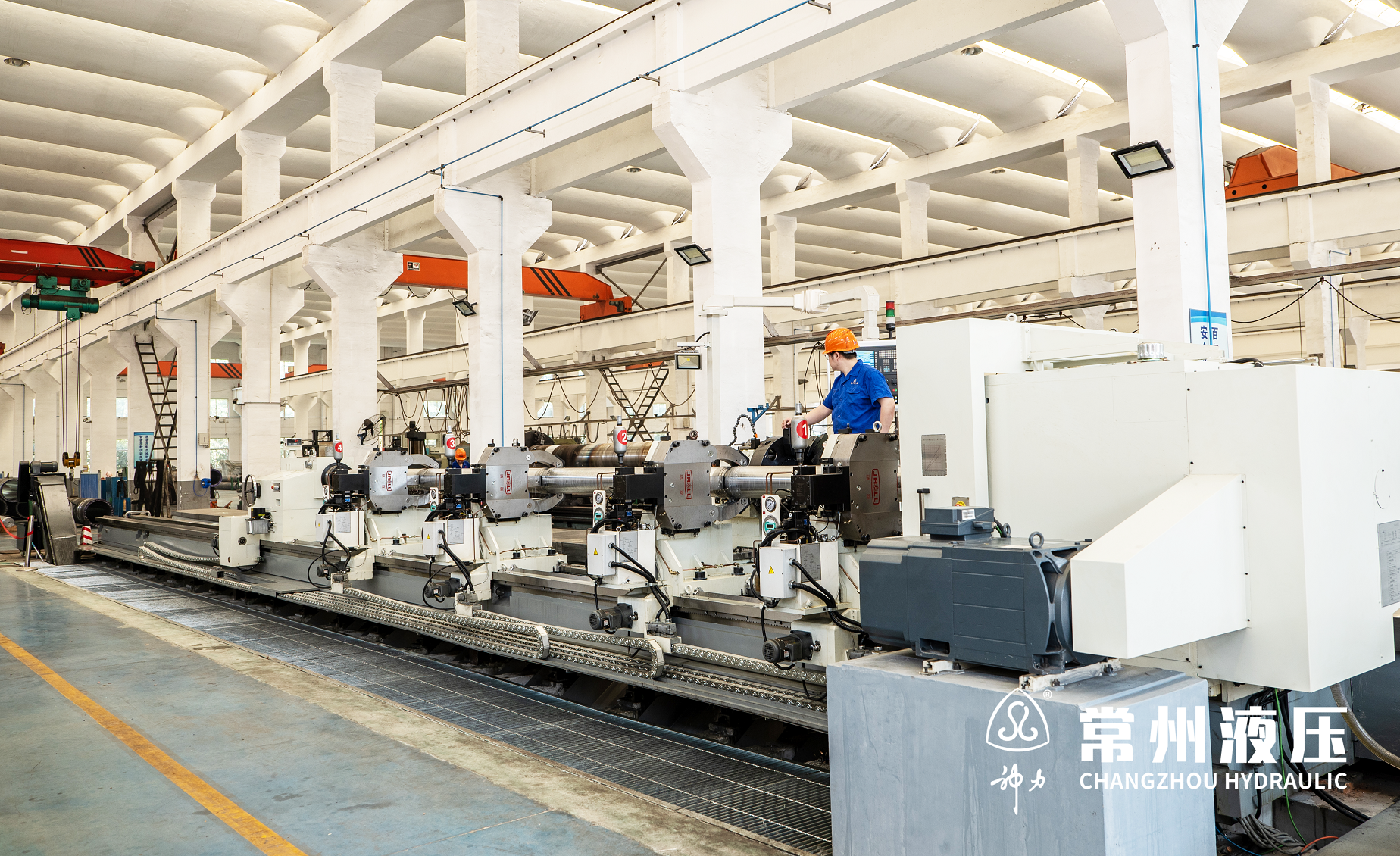
| Model designation | Category | Standard / certification as listed | MOQ | Packaging | Payment | Port | Delivery |
|---|---|---|---|---|---|---|---|
| QPPY — ISO 9001 AAA Flat Gate Hydraulic Cylinder, Max Diameter 1200mm, stroke 16 m | Hydraulic cylinder (piston structure, steel body) | ISO 9001 cited in the model designation | 1 piece | Standard export package | T/T | SHANGHAI | 15–60 days depending on product type |
| QHSY — Electric Single Acting Hydraulic Cylinder Deep Hole Radial Gate For Tower Crane | Single acting hydraulic cylinder / hydraulic hoist winch, miter gate hydraulic hoist | GB/T9001-2000, IDT ISO 9001:2000 | 1 piece | Standard export package | T/T | SHANGHAI | 15–60 days depending on product type |
| QHLY — Customized / Radial Gate Heavy Duty Hydraulic Hoist Cylinder | Large bore hydraulic cylinder, miter gate hydraulic hoist | GB/T9001-2000, IDT ISO 9001:2000 | 1 piece | Standard export package | T/T | SHANGHAI | 15–60 days depending on product type |
| Thermal Spray Ceramic Rod Industrial Hydraulic Cylinder for Container Transport (brand Magic Power) | Industrial hydraulic cylinder, carbon steel body | Certification: ISO | 1 piece | Standard export package | T/T | SHANGHAI; TIANJIN | 15–60 days depending on product type |
| QPKY — Plane Rapid Gate Double Acting Hydraulic Cylinder | Double acting hydraulic cylinder, nonstandard | No standard listed on the specification; nonstandard designation | 1 piece | Standard export package | T/T | SHANGHAI | 15–60 days depending on product type |
The QPKY row is instructive. It is a nonstandard custom cylinder, and no management standard is printed on its specification. That does not make it non-compliant — it means the buyer must carry the specification themselves, through a drawing and an agreed inspection routine. Absence of a standard line is a prompt to ask, not automatically a red flag.
| Question | ISO 9001 (quality management system) | ISO 6022:2006 (product / mounting standard) |
|---|---|---|
| What it addresses | How the organization manages design, production, inspection, documentation and corrective action | Mounting dimensions for single rod hydraulic cylinders (250 bar series) |
| Primary purpose | Consistent process control and traceability | Ensuring interchangeability of mounting dimensions |
| What it applies to | The manufacturing organization and its processes | A specific cylinder dimension set and installation interface |
| What it does not confirm | Bore, stroke, pressure rating, material grade or environmental performance of a given unit | Quality management practice or factory process control |
| Typical buyer use | Vetting supplier process discipline before an order | Confirming a replacement cylinder mounts to the same interface |
Frequently Asked Questions
1. Does an ISO 9001 reference in a hydraulic cylinder model designation mean the cylinder itself is certified?
No. It indicates the quality management system under which the cylinder is produced. Product-level characteristics such as bore, stroke, mounting dimensions, pressure rating and material grade are covered by separate product standards or by the buyer's own drawing. ISO 6022:2006, for instance, establishes mounting dimensions for single rod hydraulic cylinders (250 bar series) to ensure interchangeability — a completely different subject from ISO 9001. When a listing such as ISO 9001 AAA Flat Gate Hydraulic Cylinder, Max Diameter 1200mm appears on a datasheet, the ISO 9001 part describes the producing organization and the 1200 mm figure describes the product.
2. What should a buyer check beyond ISO 9001 when evaluating a Chinese industrial hydraulic cylinder supplier?
Check what the management system is actually expected to produce. Changzhou Hydraulic Complete Equipment Co., Ltd., located at No. 1 Xinhui Road, Wujin National High-Tech Industrial Zone, Jiangsu Province, employs about 316 staff including a 20-engineer R&D team, operates a manufacturing facility covering 10,000㎡ with an annual production capacity of approximately 120,000 units, and lists machining and testing infrastructure including CNC horizontal lathes, CNC machining centers, a moving column gantry five-sided machining center, an American Shanneng honing machine and a comprehensive testing platform for hydraulic systems. Then verify the product-side items: material grade (carbon, alloy or stainless steel), rod surface treatment (thermal spraying, ceramic coating piston rod, HVOF rod), and application requirements such as IP67 sealing for marine and metallurgical duty.
3. What do the listed MOQ and payment terms mean for a first order?
Across the listed cylinder lines the minimum order quantity is 1 piece and payment terms are T/T, with standard export packaging, a delivery window of 15 to 60 days depending on product type, and shipment from SHANGHAI, with TIANJIN also listed on the thermal spray ceramic rod container-transport cylinder. One line — the thermal spray ceramic rod industrial hydraulic cylinder for container transport — carries a listed price range of USD 100 to 20,000. A one-piece MOQ means an engineering trial requires no volume commitment, but freight, export documentation and production setup are spread across a single unit, so per-piece cost on a trial order is higher than on a repeat order.
4. Can a buyer validate a single cylinder before committing to volume?
Yes. Because MOQ is 1 piece on these lines, a single unit can be ordered for fit and function validation before any volume commitment. To make the trial meaningful, test it against the real working condition rather than a bench condition: for marine and offshore duty that means salt spray, high humidity, seawater corrosion, heavy load and shock with IP67 sealing; for metallurgical duty it means high temperature, heavy load, shock, dust, scale and water splash with heat resistance and shockproof performance; for water conservancy hoist duty it means high pressure, heavy load and intermittent 24/7 operation with frequent starts and stops. Specify the material and rod treatment on the trial order, since those are the variables a single-unit test is meant to confirm.
5. How long does production and shipping take, and what packaging is used?
Delivery time is 15 to 60 days depending on product type. Cylinders ship in a standard export package, and the port of loading is SHANGHAI, with TIANJIN listed as an additional port on one product line. Supply ability is listed at 2,400 tons per year for most lines and 15,000 tons per year for the QHSY line, which is the number to reference when planning a multi-unit project rather than a single trial unit. For a sample request, a technical quotation or the full product catalogue, contact Changzhou Hydraulic Complete Equipment Co., Ltd. by email at zzl@czhydraulic.com, by phone or WhatsApp at +86 15906122063, or download the product brochure linked at the end of this guide.

Conclusion
ISO 9001 in a hydraulic cylinder model designation is a statement about the organization, not about the individual cylinder. It describes process control, traceability, inspection discipline and documentation practice at the producing factory. It does not describe bore, stroke, mounting dimensions, pressure, material grade or environmental performance — those belong to product standards such as ISO 6022:2006 and to the specification you write as the buyer.
Compliance and exportability are two separate checklists, and both are readable from the documents a supplier provides. On the organization side: the standard cited, the edition, the certificate scope, the entity and the manufacturing address. On the product side: model designation, structure, material, treatment, and the application requirements driven by salt spray, heat, scale or gate-operating duty. On the export side: MOQ 1 piece, standard export packaging, T/T payment, 15 to 60 day delivery, and shipment from SHANGHAI — with supply ability confirmed at 2,400 tons per year for most lines and 15,000 tons per year for the QHSY line.
A one-piece minimum order makes the verification path unusually practical. Instead of debating certificates, buyers can confirm the model designation, order a single unit, test it against the real working condition, and let the result inform the volume decision. That sequence resolves the ISO 9001 question faster than any document review, because it tests the process the certificate claims to describe.
Next Step: Sample, Quote or Catalogue
Changzhou Hydraulic Complete Equipment Co., Ltd. (CZHydraulic) manufactures industrial hydraulic cylinders, non-standard customized cylinders and large-bore long-stroke cylinders, together with hydraulic control systems, servomotors, thermal spraying and surface treatment services. Export sales represent 40% of total sales, serving North America, South America, Western Europe, Eastern Europe, Eastern Asia and Southeast Asia.
Send your working condition, model designation and quantity. A one-piece trial order is accepted, so a sample can be quoted without a volume commitment.
Email: zzl@czhydraulic.com | Phone / WhatsApp: +86 15906122063 | Website: www.electrichydrauliccylinder.com
Download the full product brochure: CZHydraulic Product Brochure (PDF)
Reference notes: market size figures are attributed to Global Market Insights; regional share data to Grand View Research; the marine piling cylinder reference to Research Nester; and the mounting-dimension standard to ISO. Published market estimates vary between research firms depending on whether related hydraulic components are included.
Have Questions or Need More Details?
Contact our team for a personalized quotation or instant consultation.
Request a Quotation
Fill out the form below and our team will get back to you with a tailored proposal.
WhatsApp Direct Chat
Prefer to chat in real-time? Message us on WhatsApp for instant assistance & quick answers.
- Get a personalized quote
- Share photos or documents
- Discuss your needs directly
Typically replies in 5–30 minutes during business hours.