
Selecting Hydraulic Cylinder Steel Grades: Carbon, Alloy, or Stainless Steel
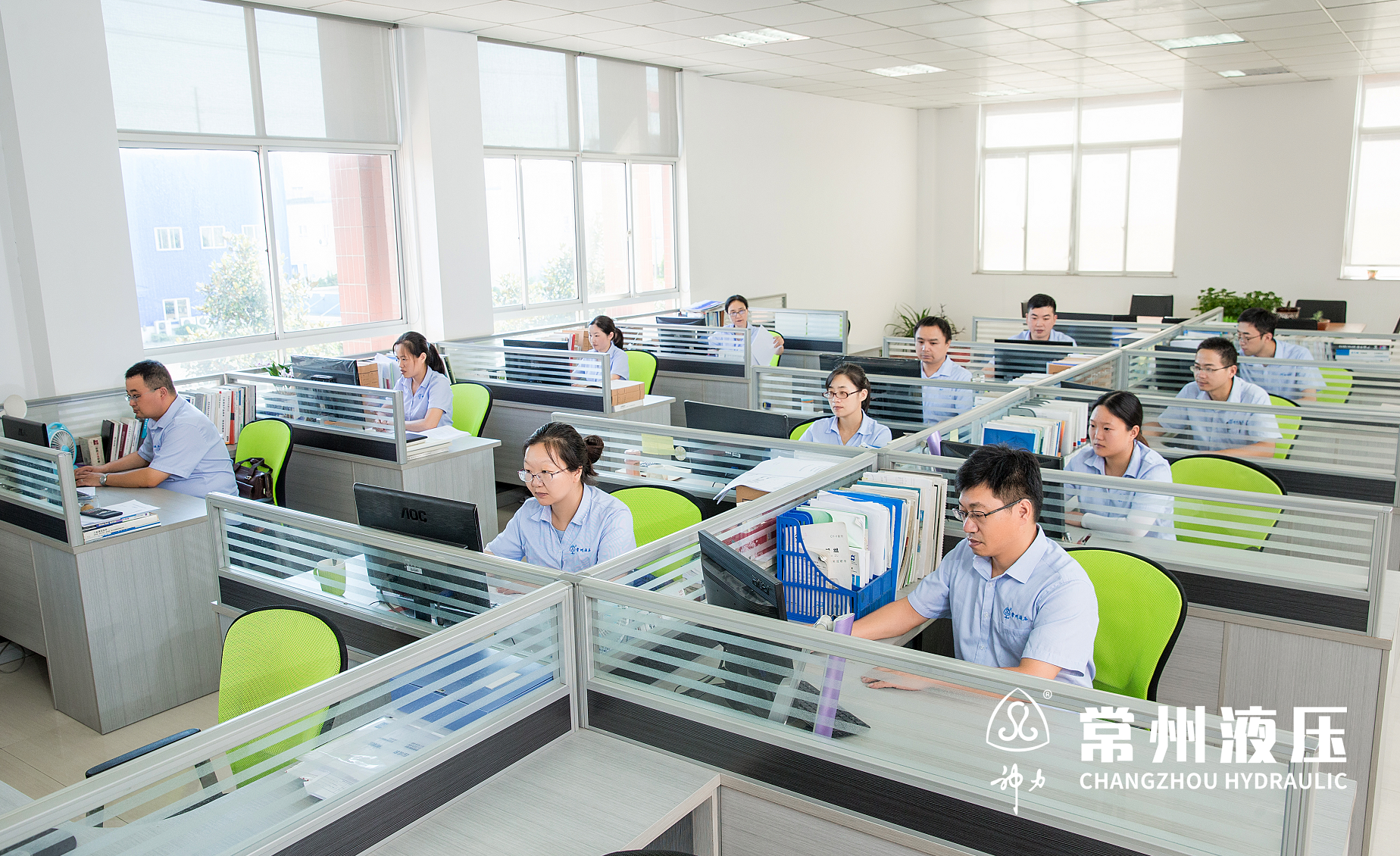
Body material is fixed at the design stage, where bore, stroke, pressure class and service environment are reviewed together.
Industrial hydraulic cylinder bodies are made of carbon steel, alloy steel, or stainless steel. That single line on a specification sheet decides how the cylinder behaves in corrosion, how much load it can carry, what it costs per unit, and how long the production and export cycle runs. This guide breaks the three families down for mechanical, marine and oil-sector duty, and shows where the material decision meets the published 15–60 day delivery window and standard export packaging shipped from Shanghai port.
Changzhou Hydraulic Complete Equipment Co., Ltd. (Changzhou Hydraulic) is a manufacturer of hydraulic cylinders, hydraulic control systems and complete hydraulic hoist equipment, based at No. 1 Xinhui Road, Wujin National High-Tech Industrial Zone, Changzhou, Jiangsu, China. Established in 1990 and working from hydraulic cylinder production for more than 35 years, the company builds industrial hydraulic cylinders, large-bore long-stroke cylinders, marine and offshore cylinders, hydraulic turbine servomotors, press machine cylinders, hydraulic power units and ceramic-coated piston rods, with export sales reported at 40% of output across North America, South America, Western Europe, Eastern Europe, Eastern Asia and Southeast Asia.
The Problem: Three Risks Sit Behind One Material Line
Body steel is rarely chosen for one reason. It is a trade-off between three risks that appear at different moments in a cylinder's service life:
- Corrosion risk. On a ship deck, an offshore platform, a port facility or a wet process line, chloride and moisture attack the body, end caps and rod long before the hydraulic oil or the seals reach their limit.
- Structural risk. High pressure, long stroke and large bore raise wall-stress and buckling demand. A grade selected purely on price per kilogram may not carry the duty.
- Commercial risk. A more corrosion-resistant grade raises unit cost and, if it has to be secured specifically for the order, changes how the production slot is planned.
The complication is that the body and the rod are two separate decisions. A cylinder may run a stainless body with a coated carbon-steel rod, or a carbon steel body with a ceramic-coated piston rod. Treating “material” as a single procurement line is where specification mismatches begin.
Scale makes the decision harder to reverse. Changzhou Hydraulic builds hoist and gate cylinders with a stroke of up to 16 m, and the largest flat gate model is listed at a maximum diameter of 1200 mm. At that size, a material change after the order is confirmed is not an adjustment — it is a new project.
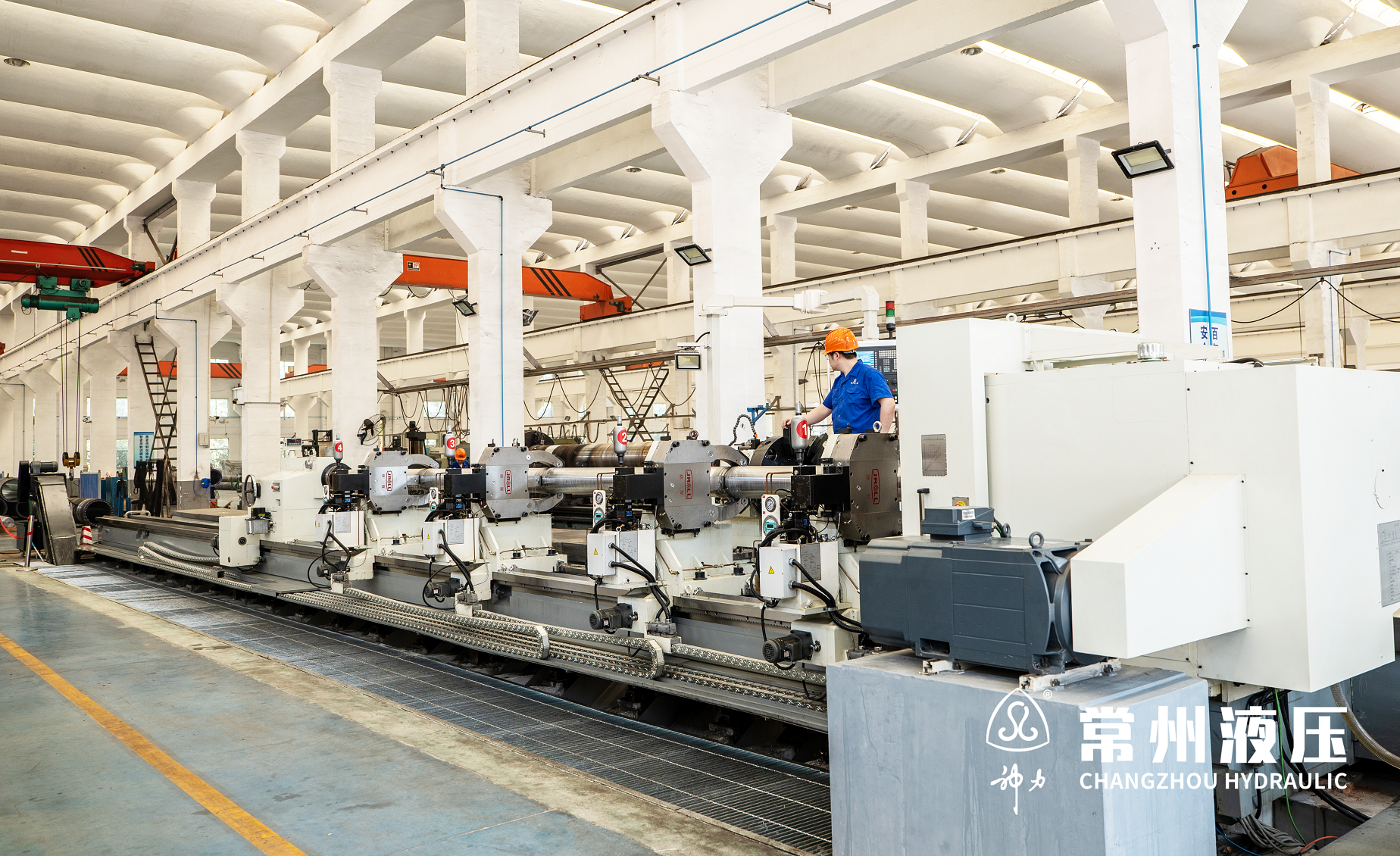
Cylinder body machining: the steel grade is locked before the first cut, not after.
Market Context: Material Specification Is Moving Up the Agenda
The demand profile behind hydraulic cylinder specification is expanding. Global Market Insights values the global hydraulic cylinder market at approximately USD 15.7 billion in 2024 and projects USD 24.7 billion by 2034. Independent estimates differ by scope: Market Research Future publishes USD 13.38 billion for 2024 and Future Market Insights USD 17.5 billion for 2025, a divergence driven largely by whether related hydraulic components are counted alongside cylinder sales.
Three structural facts explain why material choice now appears in more buyer checklists:
- Asia Pacific dominated the hydraulic cylinder market with a revenue share of 40.5% in 2025, supported by rapid industrial automation (Grand View Research).
- Welded cylinders accounted for over 53.6% of market share in 2025, a construction style chosen for strength and customization suitability in heavy equipment (Grand View Research).
- Double-acting cylinders represented over 71.6% of the function segment in 2025, reflecting preference for heavy-duty industrial duty (Grand View Research). The ‘Mill Type’ cylinder sub-segment is also identified as the fastest-growing revenue sub-segment within industrial applications on durability requirements (Research Nester).
At the same time, the market is led by consolidated OEM groups — Caterpillar Inc. held a leading share of over 8% of the global hydraulic cylinder market in 2024 (Global Market Insights) — while demand for extreme-duty equipment keeps growing. A hydraulic cylinder for marine piling with a maximum push of 5,000 tons was unveiled in Changzhou, China (Research Nester). For a buyer, that combination means quotations frequently differ most in the one line that is hardest to compare: the steel grade behind the body.
The Three Body Materials and What Each One Is For
Across the Changzhou Hydraulic range, the body material field lists carbon steel, alloy steel, or stainless steel. The three families are interchangeable in a quotation; they are not interchangeable in service.
Carbon steel bodies
Carbon steel is the base case for the majority of industrial hydraulic cylinder applications where the environment is sheltered or where external protection is part of the maintenance plan. It offers the lowest relative material cost of the three, and it machines, welds and repairs in the widest range of workshops. One Changzhou Hydraulic product line — thermal spray ceramic rod industrial hydraulic cylinders for container transport — is listed with a carbon steel body, and the ceramic coating is applied to the rod rather than the body.
Its limitation is straightforward: carbon steel does not resist chloride attack on its own. In marine, offshore or oil-sector environments it needs a defined coating, painting or enclosure system, and it assumes that system will be inspected and renewed. Where that maintenance discipline cannot be guaranteed, carbon steel is the wrong starting point regardless of its price.
Alloy steel bodies
Alloy steel is specified when the duty requires more strength than carbon steel can deliver in the same section. It is the normal answer for large-bore long-stroke hydraulic cylinders, ultra-high pressure cylinders, press machine hydraulic cylinders and metallurgical cylinders, where wall thickness, thread strength and fatigue life all matter.
The evidence of what this class of cylinder is asked to do is visible in the reference sizes: the QHLY and QPPY series are listed with a stroke of up to 16 m, and Changzhou Hydraulic supplied a hydraulic hoist designed with a holding force of 5000 kN for a pumped storage project. Alloy grades are not automatically corrosion-resistant, so a marine application that needs both load capacity and chloride protection usually requires alloy selection plus a defined surface treatment on the body and rod.
Stainless steel bodies
Stainless steel is chosen where corrosion exposure cannot be painted away — marine oil cylinders, offshore hydraulic cylinders, ocean engineering cylinders and ship hydraulic cylinders. Its relative material cost is the highest of the three, which is why the decision should be tied to a measured environment rather than to a general preference for “better material”.
Two cautions apply. First, stainless steel describes a family, not a property; mechanical strength and corrosion performance vary with the specific grade, so the grade must be stated, not assumed. Second, stainless does not remove the need for correct rod treatment, sealing selection and bore finish. Material choice and surface engineering solve different halves of the same corrosion problem.
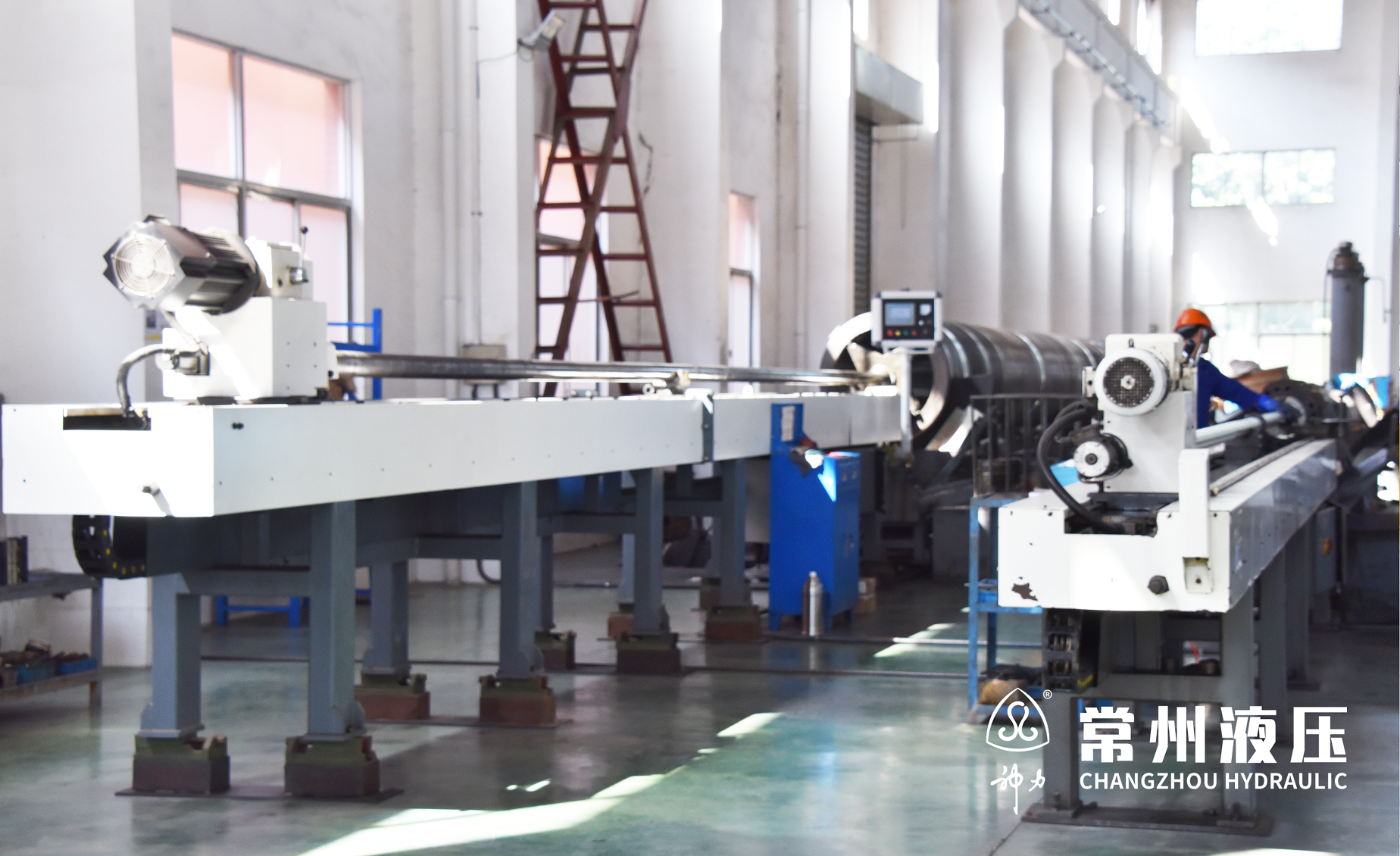
Bore honing: surface finish targets are set per cylinder, and consistent base material is a precondition for holding tolerance.
Body Steel and Rod Treatment Are Two Separate Specifications
Ceramic coating piston rods and HVOF rods are surface decisions applied to the rod, not body material decisions. A carbon steel body with a ceramic-coated rod is a common and economic combination in abrasive or moderately corrosive duty, while a stainless body with a coated rod is used when external chloride exposure is unavoidable.
The practical rule for evaluation: write the purchase specification as two lines — body material and rod surface treatment — and confirm each one against the environment. A single “corrosion-resistant hydraulic cylinder” line item gives the supplier no basis for a verifiable material choice and gives the buyer nothing to inspect on arrival.
Step-by-Step: Locking a Body Material Specification
- Classify the environment first. Sheltered mechanical equipment, outdoor port or metallurgical plant, marine deck, offshore structure, or oil-industry installation. Corrosion exposure, not price, sets the shortlist.
- Fix the mechanical duty. Bore (up to 1200 mm on the largest flat gate model), stroke (up to 16 m on the QHLY and QPPY series), pressure class and whether the cylinder is double-acting. Double-acting designs account for over 71.6% of the function segment in heavy-duty industrial use (Grand View Research).
- Screen the body family. Carbon steel where exposure is controlled; alloy steel where load and pressure exceed carbon capability; stainless steel where chloride exposure is continuous.
- Decide rod treatment separately. Ceramic coating or HVOF rod surface, matched to abrasion and corrosion, is specified on its own line.
- Confirm the interface standard. ISO 6022:2006 establishes mounting dimensions for single-rod hydraulic cylinders in the 250 bar series, which is what makes interchangeability between suppliers verifiable rather than assumed.
- Verify the supplier's documentation. Changzhou Hydraulic holds a Quality Management System certificate to ISO 9001:2015, certificate NO.02024Q1295R6M, issued through an IAF- and CNAS-recognized authority, valid from 12 June 2024 to 11 June 2027, with a scope covering the design, development, production and service of water conservancy and hydropower project opening and closing equipment, industrial hydraulic cylinders and complete sets of equipment. Every unit passes 100% testing in production.
- Freeze the specification before the order. The published delivery window is 15–60 days depending on product type, with a minimum order quantity of 1 piece, standard export packaging, shipment from Shanghai port (Tianjin is also listed for one series) and T/T payment terms. Confirm the port and packing with the quotation, because options differ by series.
Where Each Material Choice Lands: Mechanical, Marine and Oil Applications
Mechanical and press duty. Industrial multipurpose double-acting hydraulic cylinders, press machine hydraulic cylinders, metallurgical cylinders, hydraulic power units and hydraulic control systems operate where corrosion exposure is usually manageable and load capacity dominates. Carbon and alloy steel bodies are the practical core of this group, with rod surface treatment matched to the abrasion level.
Marine, offshore and ocean engineering. Marine oil cylinders, offshore hydraulic cylinders, ocean engineering cylinders and ship hydraulic cylinders are exposed to salt air, spray and immersion. Here the body grade and the rod coating are selected together, because a resistant body with a failing rod surface still produces a downtime event.
Oil industry and heavy gate control. The QHLY series is a radial gate heavy duty hydraulic cylinder / hoist cylinder for the oil industry, and the same structural family is used in water conservancy and hydropower gate control. These are large-bore, long-stroke duty positions where body stiffness and material integrity determine whether the equipment holds its geometry over years of intermittent, high-force operation.
Power and transport equipment. Heavy duty large bore hydraulic dump cylinders for transport and power equipment follow the same logic: choose the material against the load spectrum and the environment, then document the rod treatment.
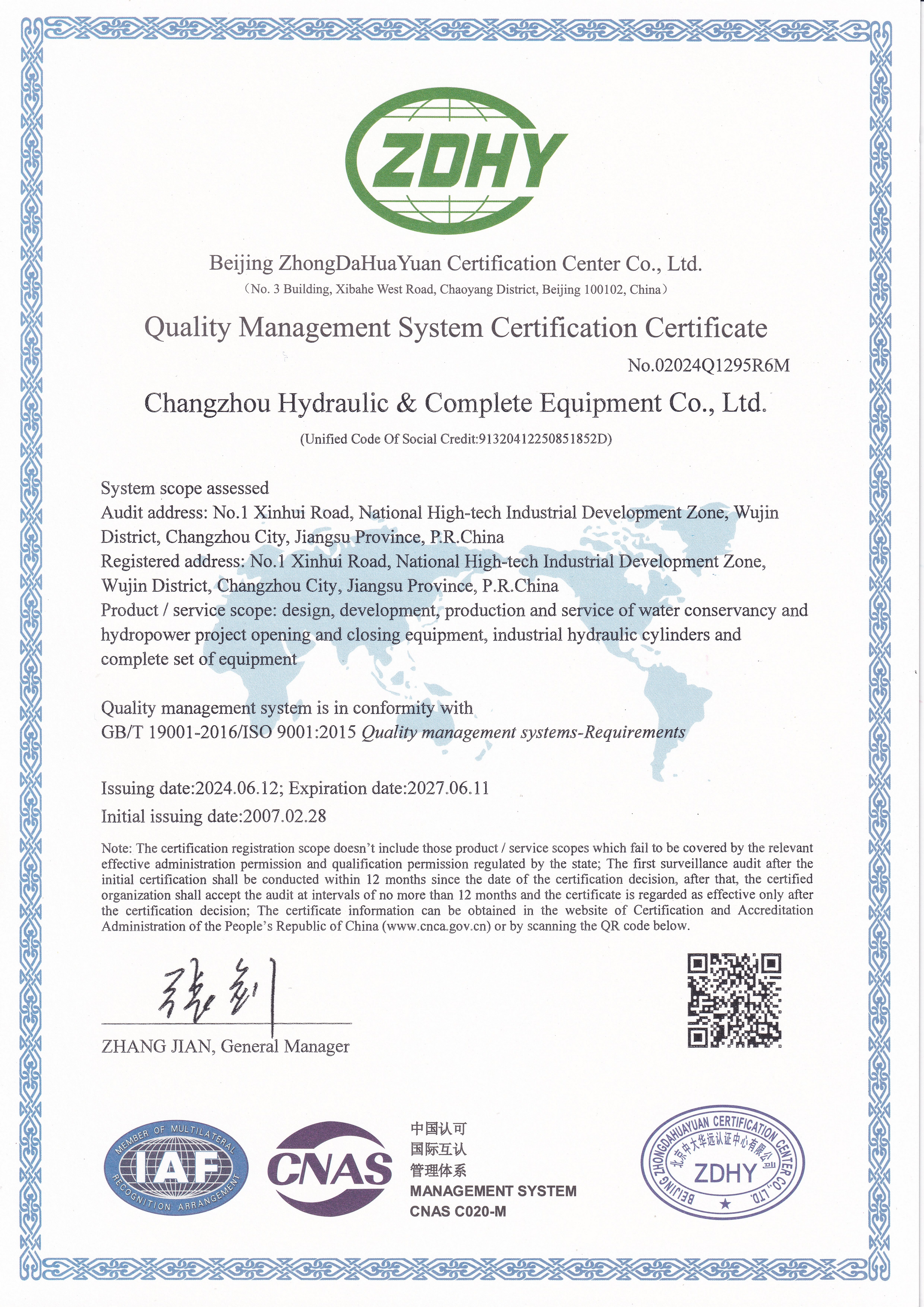
Quality Management System certification to ISO 9001:2015, certificate NO.02024Q1295R6M, issued 12 June 2024 and valid to 11 June 2027.
Body Material Comparison for Industrial Hydraulic Cylinders
| Decision factor | Carbon steel body | Alloy steel body | Stainless steel body |
|---|---|---|---|
| Corrosion resistance without coating | Base level; requires coating or a sheltered environment | Base level, comparable to carbon steel; protection still required | Highest of the three; used where chloride exposure cannot be painted out |
| Load and pressure capability | Adequate for standard and moderate-duty cylinders | Specified where load and pressure exceed carbon steel capability in the same section | Depends on the specific stainless grade; corrosion resistance, not strength, is normally the reason to specify it |
| Relative material cost | Lowest | Mid-range | Highest |
| Typical service environment | Sheltered industrial, mechanical, press and workshop duty | High-load industrial, metallurgical, hydropower and heavy structural duty | Marine, offshore, ocean engineering, ship and oil-sector duty |
| Quoted delivery window (Changzhou Hydraulic) | 15–60 days depending on product type | 15–60 days depending on product type | 15–60 days depending on product type |
| Export packaging and port | Standard export package; Shanghai port (Tianjin also listed for one series) | Standard export package; Shanghai port (Tianjin also listed for one series) | Standard export package; Shanghai port (Tianjin also listed for one series) |
| Minimum order quantity | 1 piece | 1 piece | 1 piece |
| Quality system applied | ISO 9001:2015 certificate NO.02024Q1295R6M; 100% testing | ISO 9001:2015 certificate NO.02024Q1295R6M; 100% testing | ISO 9001:2015 certificate NO.02024Q1295R6M; 100% testing |
The three material families are offered across the range, and the corrosion, strength and cost relationships shown above reflect general engineering practice. The final grade and heat treatment are confirmed per project specification; buyers should request the material certificate for the grade actually supplied, in addition to the system certificate.
Production, Capacity and Delivery Facts Behind the Material
Material selection only becomes a delivery commitment once it meets the supplier's production reality. Changzhou Hydraulic operates on OEM/ODM terms with customization of all kinds of hydraulic cylinders, a monthly capacity of 5,000 units and a minimum order quantity of 1 piece. Supply ability is listed at 2,400 tons per year across several cylinder series, rising to 15,000 tons per year for the miter gate hydraulic hoist line. Export markets are listed as the EU and the Middle East within an overall export ratio of 40%, and after-sales support is provided remotely.
Price is configuration-driven rather than material-driven alone. For reference, the thermal spray ceramic rod industrial hydraulic cylinder line for container transport — a carbon steel body with a ceramic rod coating — is published in the USD 100 to 20,000 per unit range, which shows how far bore, stroke, pressure class and surface treatment move the final figure before material grade is even counted.
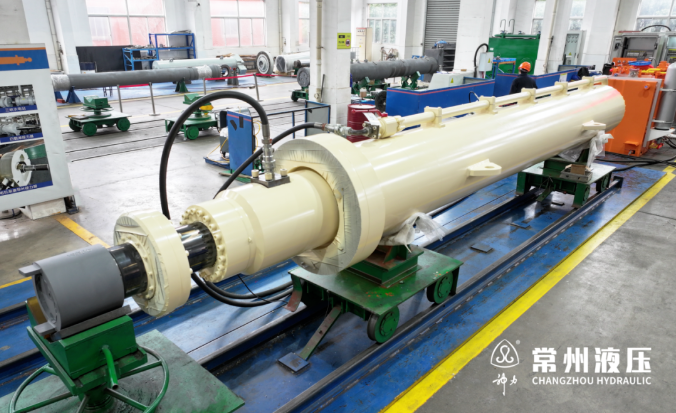
Complete hydraulic hoist equipment for a tailwater emergency gate — a duty position where body material and geometry must hold over a long service life.
Proof in the Field: What Long-Service Duty Demands
A pumped storage power station project in China illustrates why material and dimensional discipline are evaluated together. The project involved 3 installed units and has been operational for 10 years. Its core hydraulic hoist was designed with a holding force of 5000 kN, so that the tailrace emergency gate can close quickly and smoothly under emergency conditions — unit failure or pipeline rupture — instantly cutting off tailrace flow to prevent river water from flowing back into the powerhouse and protecting the underground powerhouse and core units.
During inspection, on-site measurements confirmed that the flatness error of the structurally complex gate slot cover plate was controlled within 0.05 millimeters per square meter, meeting the design drawings and ensuring a seamless fit between the cover plate and the gate slot. That level of dimensional control is only achievable when the base material is defined, consistent and matched to the machining and honing process from the start of production.
FAQ: Steel Grade Selection for Industrial Hydraulic Cylinders
Which standards and certifications should a body material be documented against?
Two layers matter. For interchangeability, ISO 6022:2006 establishes mounting dimensions for single-rod hydraulic cylinders in the 250 bar series. For the manufacturing system, Changzhou Hydraulic holds a Quality Management System certificate to ISO 9001:2015, certificate NO.02024Q1295R6M, issued through an IAF- and CNAS-recognized authority, valid from 12 June 2024 to 11 June 2027, with a scope covering the design, development, production and service of water conservancy and hydropower project opening and closing equipment, industrial hydraulic cylinders and complete sets of equipment. Buyers should ask for the material certificate of the grade actually supplied, not only the system certificate.
Can one supplier deliver carbon, alloy and stainless steel bodies in large-bore, long-stroke sizes?
Yes. Body material is listed as carbon steel, alloy steel or stainless steel across the range, which includes industrial hydraulic cylinders, large-bore long-stroke hydraulic cylinders, ultra-high pressure cylinders, press machine cylinders, metallurgical cylinders, marine oil cylinders, offshore and ocean engineering cylinders, ship hydraulic cylinders, hydraulic turbine servomotors and standard oil cylinders. Stroke reaches 16 m on the QHLY and QPPY series, and the largest flat gate model is listed at a maximum diameter of 1200 mm. Production runs on OEM/ODM terms with customization of all kinds of hydraulic cylinders and a monthly capacity of 5,000 units.
What drives the cost difference between the three body materials?
Material grade is one of several cost drivers, alongside bore, stroke, pressure class and rod surface treatment. Stainless steel is generally the highest-cost body option, alloy steel sits above carbon steel, and carbon steel is the base case where corrosion exposure is controlled. For reference, one Changzhou Hydraulic line — thermal spray ceramic rod industrial hydraulic cylinders for container transport, with a carbon steel body — is published in the USD 100 to 20,000 per unit range, which shows how widely configuration moves the price. Minimum order quantity is listed as 1 piece.
Can a material choice be validated before full production?
Minimum order quantity is listed as 1 piece and every unit passes 100% testing in production, so a buyer can order a first piece to validate body material, rod treatment and bore finish before scaling to series volumes. After-sales support is handled remotely.
How does the material decision affect delivery time and export shipping?
The published delivery window is 15–60 days depending on product type, so the body material and rod treatment should be confirmed at the point of order rather than changed once production starts. Products ship in standard export packaging from Shanghai port, with Tianjin also listed for one series, and payment terms are T/T. To compare a carbon, alloy or stainless configuration against a specific bore, stroke and environment, send the duty conditions and drawing to Changzhou Hydraulic by email at zzl@czhydraulic.com or WhatsApp at +8615906122063, or download the product brochure for reference.
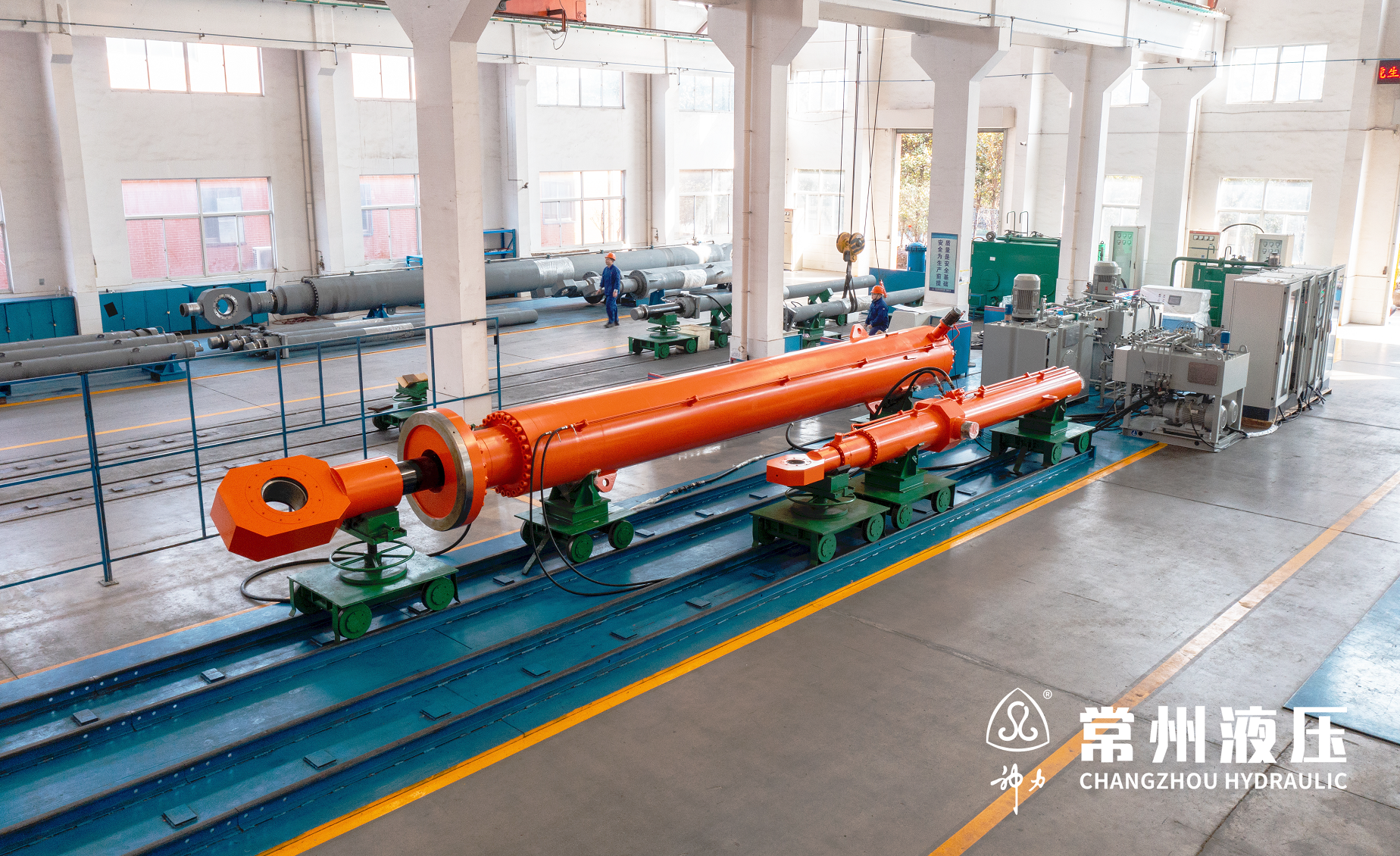
Joint debugging test area: cylinder, rod and control system are verified together before shipment.
Next Step: Compare the Three Grades on Your Own Specification
The working rule is simple. Classify the environment, fix bore, stroke and pressure, then select carbon, alloy or stainless steel against corrosion exposure and load — and specify the rod surface on a separate line. Confirm the grade before the order, because it sets both the production slot and the export packing arrangement inside the 15–60 day window.
Send your application conditions, duty cycle and drawing to Changzhou Hydraulic Complete Equipment Co., Ltd. for a material recommendation and quotation: email zzl@czhydraulic.com, WhatsApp +8615906122063, or review the full cylinder range at electrichydrauliccylinder.com. The current product brochure, including series data and packaging details, can be downloaded here.
Conclusion
Carbon steel, alloy steel and stainless steel are not three grades of the same answer. Carbon steel is the economic base case for sheltered mechanical and press duty. Alloy steel carries the load where bore, stroke and pressure demand more strength than a plain carbon section can provide — up to a 16 m stroke and a 1200 mm maximum diameter in the Changzhou Hydraulic range, and holding forces designed in the 5000 kN class for gate control. Stainless steel is specified when chloride exposure is continuous and cannot be maintained away, at the highest relative material cost of the three.
Get the sequence right and the rest follows: environment first, mechanical duty second, body family third, rod treatment fourth, documentation fifth, and the material specification frozen before the order enters a 15–60 day production and export cycle out of Shanghai port.
Have Questions or Need More Details?
Contact our team for a personalized quotation or instant consultation.
Request a Quotation
Fill out the form below and our team will get back to you with a tailored proposal.
WhatsApp Direct Chat
Prefer to chat in real-time? Message us on WhatsApp for instant assistance & quick answers.
- Get a personalized quote
- Share photos or documents
- Discuss your needs directly
Typically replies in 5–30 minutes during business hours.