
Hydraulic Cylinder Applications by Industry: Sizing Guide for Mining, Marine and Hydropower
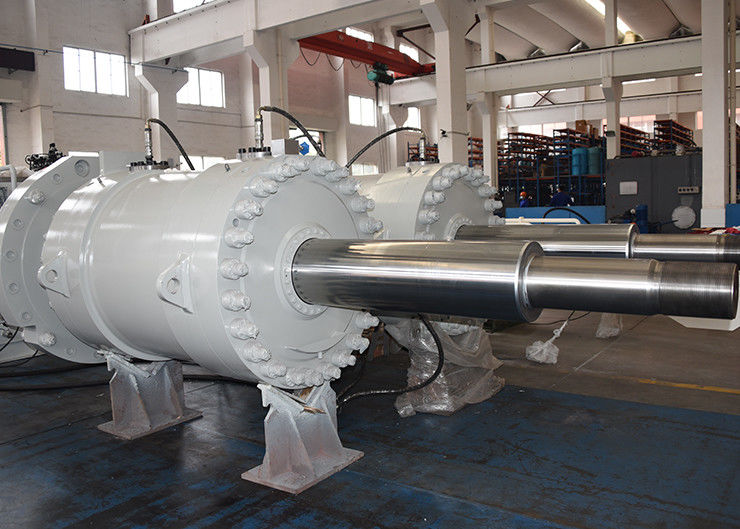
Sizing an industrial hydraulic cylinder by industry starts with three decisions in a fixed order: match the cylinder variant to the duty cycle, size the bore from the working load with a 1.3–1.5 safety margin, then verify column stability and rod protection against the actual environment. In mining and bulk handling this usually produces a double-acting piston cylinder with a protected rod; in hydropower it produces a flat gate or radial gate heavy-duty hoist cylinder sized around holding force and closing speed; in marine, offshore and port equipment it produces a stainless or ceramic-coated marine oil cylinder that must also satisfy classification-society rules.
This guide is written for project engineers and procurement teams specifying cylinders for industrial, energy and port facilities. It maps cylinder variants to working conditions, sets out a six-step sizing sequence, and shows where published standards such as ISO 6020-1, ISO 6022 and ISO 10100, or marine rule DNVGL-CG-0194, actually change the answer. The reference range comes from Changzhou Hydraulic Complete Equipment Co., Ltd (brand: CHANGZHOU HYDRAULIC), a hydraulic cylinder and hydraulic hoist manufacturer based in Changzhou, Jiangsu, China, established in 1990.
Problem Definition: Why a Cylinder That Works in One Industry Fails in Another
Most cylinder failures on industrial projects are selection failures rather than manufacturing failures. Two cylinders can carry the same nominal bore and stroke and still be completely non-interchangeable, because the working condition — not the dimensions — decides what the cylinder has to survive.
Four risk categories recur across mining, marine and hydropower specifications, and each one has a defined control method:
- Selection and matching risk. Insufficient thrust, excessive travel or the wrong mounting method. The control is an accurate load calculation with a 1.3–1.5 safety factor, a stability check on long strokes, and confirmation of whether the mounting is hinged, flanged or trunnion-type, including the shear strength of the connecting pin and the load capacity of the ear thread.
- Material and heat-treatment risk. Piston rod fracture or cylinder burst when material specification and heat treatment are not controlled. The control is high-strength quenched-and-tempered rod steel such as 45# or 40Cr, a precision cold-drawn barrel such as 27SiMn, medium-frequency quenching of the rod to HRC55-60, hard chrome of at least 0.03 mm, honed bore, and ultrasonic or magnetic-particle inspection of the welded cylinder bottom.
- Corrosion and fatigue risk. Rod pitting and plating peel-off in marine climates or chemical environments. The control is a 316L stainless rod or ceramic coating instead of ordinary chrome plating, a retractable dust cover on the exposed rod, and shutdown rust prevention.
- Hydraulic shock and exhaust risk. Water hammer and cavitation at commissioning. The control is proper air exhaust, a preset buffer so the piston does not strike the cylinder head at end of stroke, and pressure step-loading from low to high during debugging.
The practical consequence of getting this wrong is not a specification deviation — it is an unplanned outage. A stalled hoist cylinder in a water conservancy gate house, a rod that pits through in a salt-laden port environment, or a press cylinder that cannot hold its cycle rate all stop the asset, not just the component.
Industry Background: What the Market and the Standards Actually Tell You
The global hydraulic cylinder market reached USD 17.34 billion in 2025, according to Fortune Business Insights market research. The same research projects the industrial manufacturing segment to grow at a CAGR of 6.12% through 2031, ahead of construction equipment growth. For buyers, the relevant reading is not the headline number — it is that demand is spreading across industrial, energy and port applications, which means cylinder variants are increasingly specified against application duty rather than against a single standard series.
Standards do two different jobs, and buyers routinely confuse them. Dimensional standards define interchangeability: ISO 6020-1:2007 covers metric mounting dimensions for medium-series cylinders at 16 MPa, applicable to round-head cylinders with bores from 25 mm to 200 mm and to round or square-head cylinders with bores above 200 mm; ISO 6022:2006 covers mounting dimensions at 25 MPa, the heavy-duty series; ISO 10762:2015 covers mounting dimensions for cylinders used at 10 MPa. None of these documents certifies that a given supplier can build the product — they only define the envelope and the interfaces.
Test standards are the second job. ISO 10100:2020 specifies acceptance and function tests for hydraulic fluid power cylinders, which is the document a factory acceptance test plan should reference. For marine and offshore duty, DNVGL-CG-0194 adds a minimum buckling safety factor of 4.0 for standard calculations — a materially different requirement from the 1.3–1.5 load margin used in general industrial sizing.
Cost expectations also shift by environment. Published commercial research places stainless steel hydraulic cylinders in marine and offshore grade, in standard sizes, in the range of USD 1,000 to USD 3,200. That band reflects material and documentation, not just machining hours, which is why stainless specifications should be justified by the corrosion profile rather than applied by default.
Detailed Solution: Matching the Cylinder Variant to the Working Condition
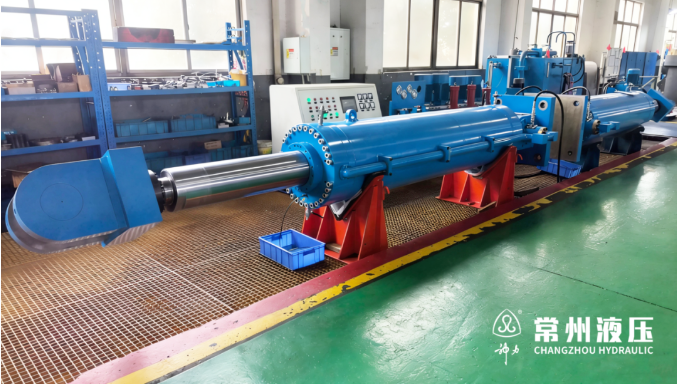
Flat gate and plane rapid gate cylinders (double acting)
A flat gate cylinder is a double-acting piston cylinder: it must drive the gate in both directions and hold it in position. In water conservancy applications the sizing driver is thrust plus closing speed, because the gate has to seat quickly and stay seated. CHANGZHOU HYDRAULIC builds this variant within its flat gate cylinder range, including the AAA series produced under an ISO 9001 quality management system. The cylinder is a customized industrial hydraulic cylinder rather than a catalogue item, because stroke, mounting and holding force are set by the gate structure.
Radial gate heavy-duty hoist cylinders
Radial gates move on an arc, so the cylinder geometry, pin arrangement and load direction all differ from a flat gate installation. The QHLY radial gate heavy-duty hoist cylinder is the variant built for this duty, where the dominant requirement is holding force and controlled closing rather than high cycle rate. Lift force is what the sizing calculation must protect: in a documented Chinese pumped storage project, the core hydraulic hoist was designed with a holding force of 5000 kN specifically so the gate could close quickly and smoothly and cut off tailrace flow during an emergency.
Large-bore, long-stroke cylinders
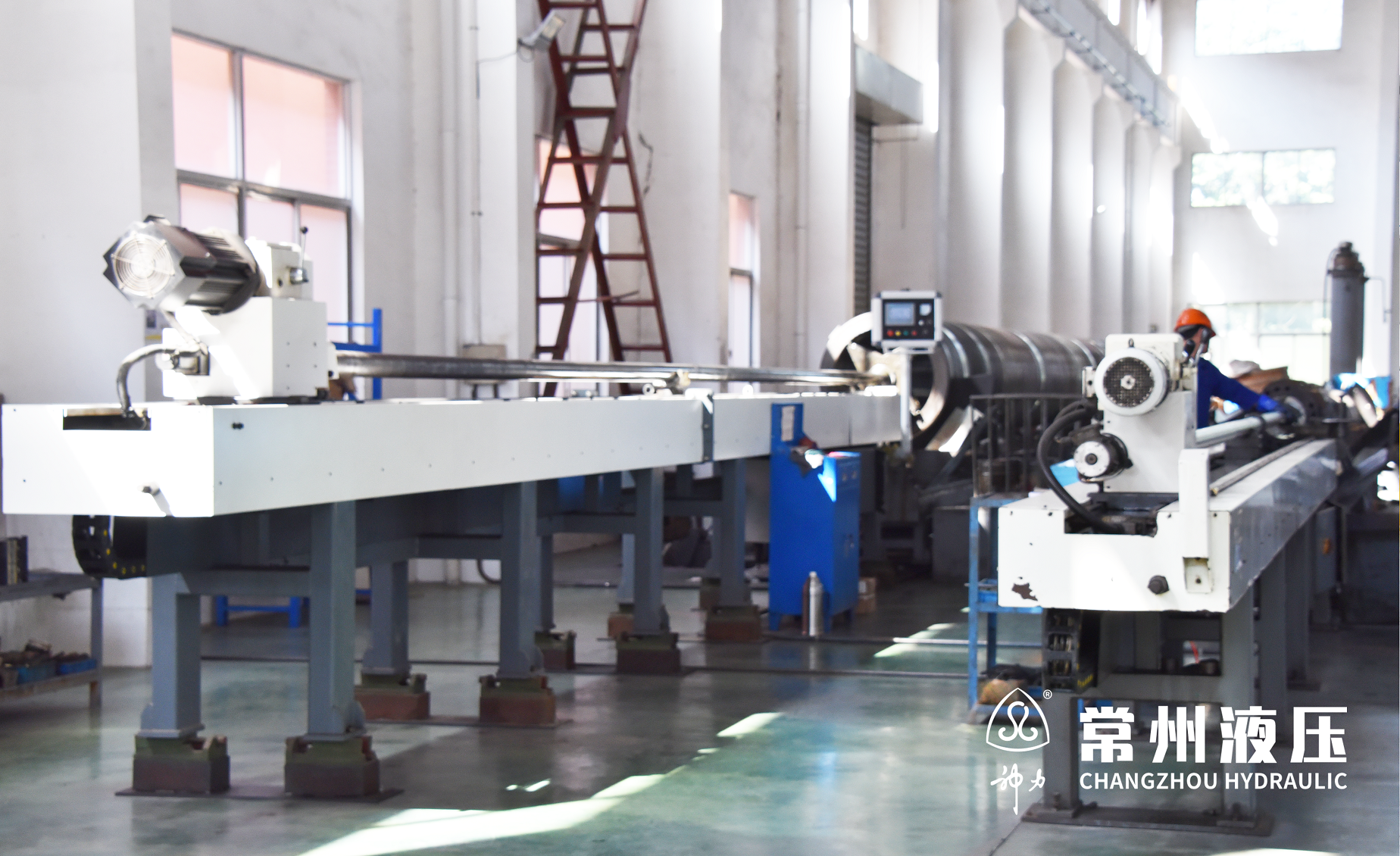
Published capability reporting for Changzhou Hydraulic Complete Equipment Co., Ltd. states piston diameters up to 1.25 m and strokes reaching 25 m. Above roughly ten times the bore diameter, the piston rod stops behaving as a short strut and starts behaving as a column: it must be checked for buckling under compressive load before the bore is fixed. This is the single most common sizing omission on large-bore long-stroke hydraulic cylinder projects, and it is the reason a supplier's machine capacity (honing, deep-bore machining, assembly and test length) has to be verified alongside the drawing.
Marine, offshore and ship cylinders
A marine oil cylinder, offshore hydraulic cylinder or ocean engineering oil cylinder is defined by its environment before its load. Salt spray, humidity and immersion shift the specification toward 316L stainless rod material or ceramic coating instead of ordinary chrome plating, plus a retractable dust cover to keep sand and debris off the rod. CHANGZHOU HYDRAULIC supplies marine oil cylinders, ship hydraulic cylinders and offshore variants alongside hydraulic power units and hydraulic control systems, which matters when the cylinder and its control package are commissioned together.
Hydraulic turbine servomotors and control systems
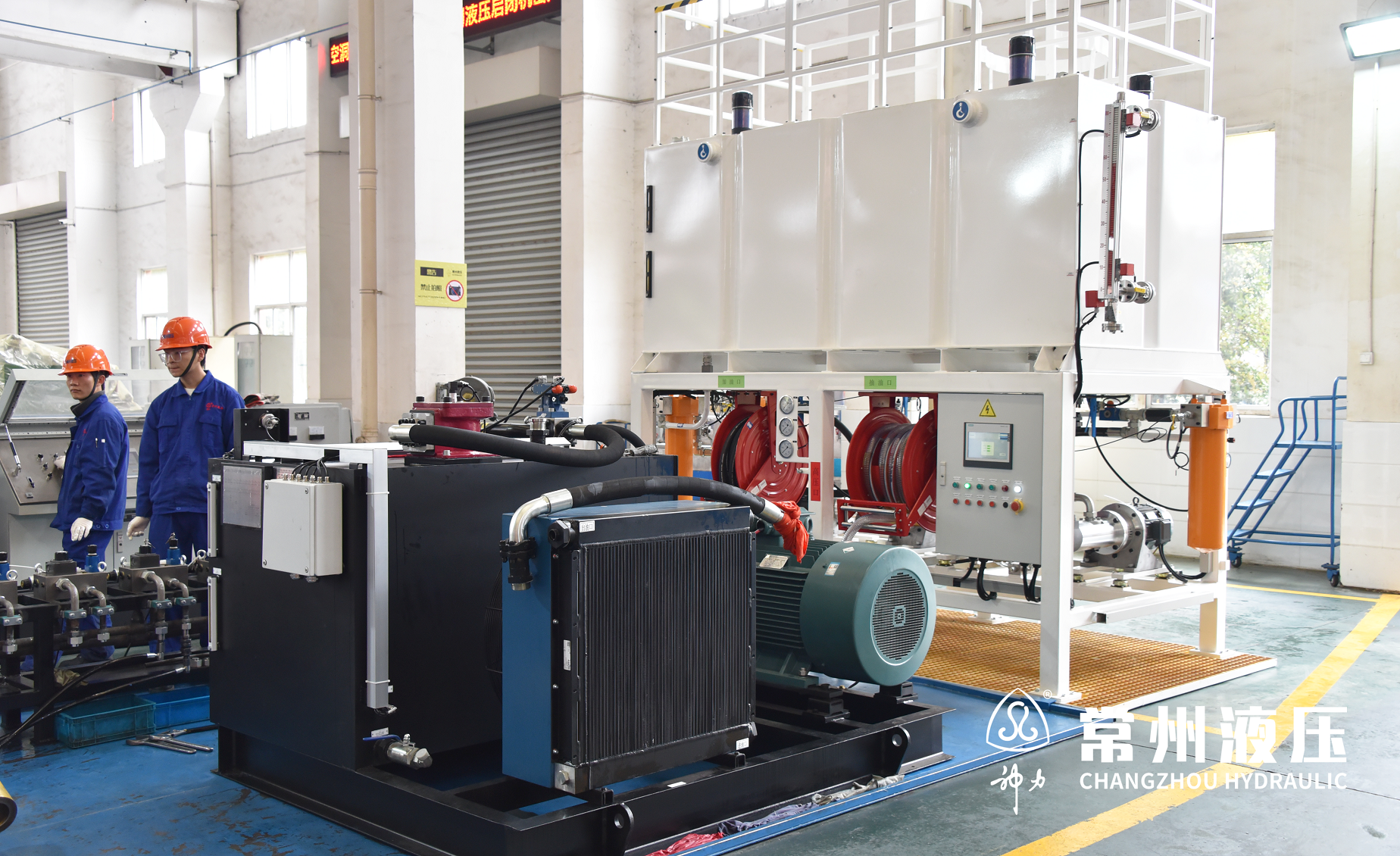
A hydraulic turbine servomotor is a position-control actuator, not a general lifting cylinder. Its sizing is dominated by response accuracy, oil cleanliness and the interface with the hydraulic control system, and it is normally verified by joint debugging of cylinder plus control package rather than by a single-component test. The company operates a joint debugging test area for exactly this purpose and has supplied servomotors for pumped storage projects.
Press machine and metallurgical cylinders
Press machine hydraulic cylinders and metallurgical cylinders sit at the opposite end of the duty spectrum: high cycle counts, heat exposure and continuous rod wear. Here the rod surface is the consumable. CHANGZHOU HYDRAULIC offers both hard-chrome and ceramic coating piston rod options, plus HVOF rod treatment, and its comparison data states that the ceramic option delivers longer service life and reduces total cost of ownership by 30% versus chrome-plated rods, with the benefits concentrated in corrosion resistance, scratch and cavitation resistance, coating adhesion and the absence of hydrogen embrittlement risk.
Steel grade selection: carbon, alloy or stainless
Material choice follows three questions. Carbon and alloy steel grades cover most indoor and shielded outdoor duty: 45# or 40Cr for the piston rod and 27SiMn precision cold-drawn tube for the barrel are the specified grades in the company's material control standard. Stainless steel, typically 316L for the rod, is reserved for marine climate and chemical exposure. Ceramic coating is the third route: it keeps a steel substrate but changes the surface behaviour. The sizing sequence below places this decision after the load and stability checks, because material choices cannot rescue an undersized bore.
Step-by-Step Breakdown: A Six-Step Sizing Sequence
Step 1 — Fix the load case and the thrust margin
Calculate the maximum pushing and pulling force from the actual working condition, then apply a safety factor of 1.3–1.5. The failure being prevented is an undersized cylinder — a small cylinder carrying a load it was never calculated for. Record both directions of force for double-acting cylinders, and record the holding requirement separately from the moving requirement for gate applications.
Step 2 — Verify stability before locking the bore
For strokes beyond ten times the cylinder diameter, perform a buckling check on the piston rod. For marine and offshore duty, apply the DNVGL-CG-0194 minimum buckling safety factor of 4.0 rather than the general industrial margin. If stability governs, the answer is usually a larger rod diameter or a different mounting geometry — not a larger bore.
Step 3 — Set stroke, mounting and installation tolerance
Confirm whether the mounting is hinged, flanged or trunnion-type, and calculate the shear strength of the connecting pin and the load capacity of the ear thread. Specify spherical or joint bearings at the connection to absorb accumulated installation error. During installation, use a laser alignment instrument or dial gauge so that the coaxiality error between the cylinder centreline and the load direction stays within 0.05 mm per 100 mm. Fix the cylinder barrel first, connect the load second, and adjust the buffer last.
Step 4 — Choose material and rod protection against the environment
Select the rod and barrel grade from the corrosion and abrasion profile, then choose the surface treatment: hard chrome of at least 0.03 mm on a medium-frequency quenched rod at HRC55-60, ceramic coating, or a 316L stainless rod. Add a retractable dust cover where sand, gravel or welding slag is present, and specify shutdown rust prevention for equipment that sits idle for long periods.
Step 5 — Define acceptance testing and documentation
Reference ISO 10100:2020 for acceptance and function tests, and require the test record as a deliverable. CHANGZHOU HYDRAULIC applies quality control on a 100% test standard, with non-destructive inspection of the welded cylinder bottom and key stressed components. On the pumped storage gate project referenced earlier, on-site verification confirmed that flatness error of the structurally complex gate slot cover plate was held within 0.05 mm per square metre, meeting the design requirement — the type of dimensional evidence a project engineer should request, not assume.
Step 6 — Plan commissioning, maintenance and spares
After installation, exhaust air from the cylinder chamber by slowly cycling the piston or loosening a pipe joint. Confirm the buffer setting on high-speed, heavy-load cylinders so the piston does not strike the cylinder head. During debugging, raise pressure in steps — 30%, 60%, 100% — watching for creeping or abnormal noise. Then set the maintenance interval and order commissioning spares, because hydraulic cylinder maintenance cost is driven by downtime, not by seal price.
Use Cases: How the Same Sequence Plays Out Across Industries
Mining and bulk material handling
Mining duty is high-cycle and abrasive. The cylinder variant is normally a double-acting piston cylinder on dump, bucket or conveyor-related functions, and the sizing drivers are thrust margin, rod protection against dust and slag, and service access. Dust covers and shutdown rust prevention are cost controls here, not options: a pitted rod destroys the seal and turns a wear item into a structural repair.
Marine, offshore and port facilities
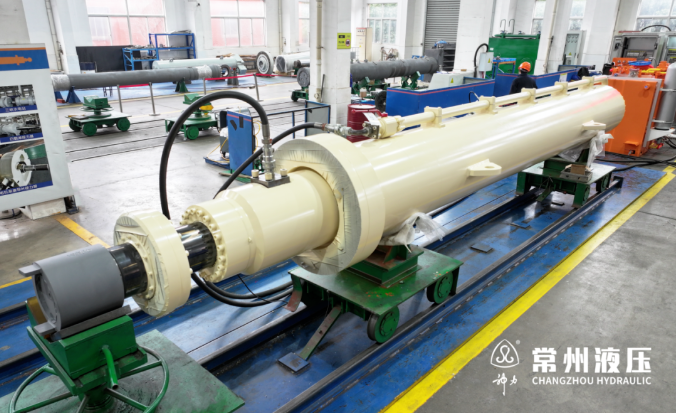
Port cranes, ship systems and offshore structures combine salt exposure with continuous duty. Selection moves to 316L stainless or ceramic-coated rods, DNVGL-CG-0194 stability calculation, and a hydraulic power unit and control system specified as one package so that commissioning responsibility is not split between suppliers. Stainless specifications should be justified by the exposure profile, given the USD 1,000–3,200 range reported for standard-size marine-grade stainless cylinders.
Hydropower and water conservancy
Hydropower projects combine gate cylinders, hoist equipment, servomotors and control systems on one site. A documented Chinese pumped storage case illustrates the durability requirement: 3 units installed, 10 years of operation, a core hydraulic hoist holding force of 5000 kN, and a design purpose of instant tailrace flow cutoff to prevent river water backflow into the powerhouse during unit failure or pipeline rupture. Gate slot cover plate flatness was verified on site within 0.05 mm per square metre. For procurement teams, a ten-year operating record on comparable equipment is a more useful reference than a component datasheet.
Oil, metallurgy and forming
Metallurgical cylinders and press machine cylinders prioritise cycle rate, heat tolerance and rod wear. Ceramic coating or HVOF rod treatment is specified where chrome plating breaks down, and the total-cost argument is service life rather than purchase price. Ultra-high pressure hydraulic cylinder variants appear where the system pressure itself is the design constraint.
Comparison Table: Cylinder Variant, Industry Fit and Sizing Driver
| Cylinder variant | Typical industry use | Dominant sizing driver | Rod and material protection | Reference standard or rule |
|---|---|---|---|---|
| Double-acting piston cylinder (flat gate / plane rapid gate) | Hydropower gates, water conservancy | Thrust in both directions plus controlled closing speed | 45# / 40Cr rod, HRC55-60, hard chrome ≥0.03 mm; 27SiMn honed barrel | ISO 6020-1:2007 (16 MPa class); ISO 6022:2006 (25 MPa class) |
| Radial gate heavy-duty hoist cylinder | Radial spillway and water conservancy gates | Holding force and controlled gate closure | As above, plus NDT of welded cylinder bottom | ISO 10100:2020 acceptance and function tests |
| Large-bore long-stroke cylinder | Hydropower, heavy industry, energy facilities | Column stability, bore honing, transport envelope | Honed barrel with chrome or ceramic-coated rod | DNVGL-CG-0194 buckling safety factor 4.0 for marine calculation |
| Marine / offshore / ship oil cylinder | Ports, offshore structures, ship systems | Corrosion and fatigue resistance | 316L stainless rod or ceramic coating; retractable dust cover | DNVGL-CG-0194 |
| Hydraulic turbine servomotor with control system | Pumped storage and hydropower | Position accuracy and joint debugging with the control package | Oil cleanliness control; honed bore | ISO 10100:2020 |
| Press machine and metallurgical cylinder | Metal forming, metallurgy | Cycle rate, heat exposure, rod wear | Ceramic coating piston rod or HVOF treatment | ISO 6022:2006 (25 MPa class) for heavy-duty interfaces |
Standards listed are dimensional or test references for specification writing. They do not certify any individual product; supplier certificates, material records and acceptance-test reports must be verified separately.
Designing for the Long Term: Repeatability, Spares and Supply Continuity
Sizing is a one-off engineering exercise; keeping a facility running is a recurring one. Three supply attributes determine whether a cylinder specification stays repeatable over a multi-year operating cycle.
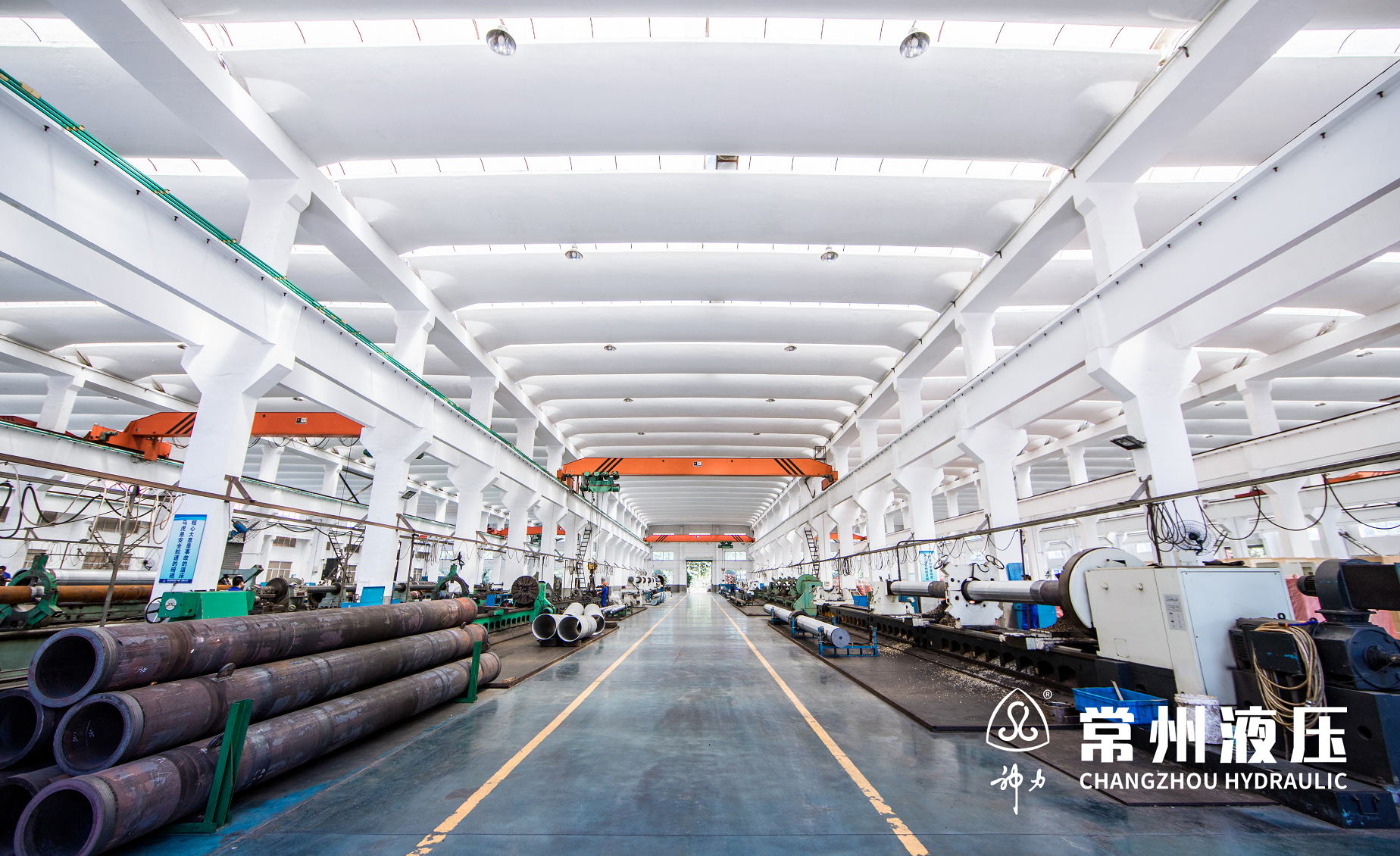
- Production capacity against project demand. Changzhou Hydraulic Complete Equipment Co., Ltd. operates with a monthly production capacity of 5,000 units and a minimum order quantity of 1 unit, supported by 316 employees and a 20-engineer R&D team. That combination allows a single spare cylinder and a phased project order to run through the same process.
- Documented quality repeatability. Quality control is based on 100% test standards, which is what makes a replacement cylinder comparable to the original rather than merely dimensionally similar. For a gate hoist or a press line, dimensional similarity is not the requirement.
- Lead-time planning. Production lead time varies by product, so long-lead items — large-bore long-stroke cylinders, radial gate hoist cylinders and complete hoist equipment — must be scheduled against the installation window rather than ordered against the maintenance budget.
Commercial terms are structured to support that model: minimum order quantity 1 unit, delivery terms EXW, FOB or CIF, payment terms 50/50, and acceptance criteria of 100% testing before delivery. The manufacturer exports to North America, South America, Western Europe, Eastern Europe, Eastern Asia and Southeast Asia, with exports representing 40% of output — relevant when a project requires a supplier already familiar with export documentation and inspection access.
A ten-year operating record on installed equipment is the practical test of all of this. The pumped storage gate project described above has been in operation for 10 years with 3 units installed, which is the kind of continuity evidence procurement teams should ask for on hydropower and water conservancy packages.
FAQ: Industry Cylinder Sizing and Procurement Questions
Which standards should a mining, marine or hydropower cylinder be specified against?
Specify dimensional and test references separately. For dimensions and interchangeability, ISO 6020-1:2007 covers medium-series mounting at 16 MPa with bores from 25 mm to 200 mm and larger; ISO 6022:2006 covers mounting dimensions at 25 MPa (250 bar); ISO 10762:2015 covers dimensions at 10 MPa. For verification, ISO 10100:2020 specifies acceptance and function tests for hydraulic fluid power cylinders. Marine and offshore duty adds DNVGL-CG-0194, which requires a minimum buckling safety factor of 4.0 for standard calculations. None of these standards certifies a supplier's capability, so request material certificates, acceptance-test records and quality management system documentation — Changzhou Hydraulic Complete Equipment Co., Ltd. operates an ISO 9001 quality management system and applies 100% testing before delivery.
Can one manufacturer cover flat gate, radial gate, marine and mining cylinder variants?
A manufacturer with both custom engineering and in-house machining and testing can cover the range, because the variants share processes but not dimensions. CHANGZHOU HYDRAULIC produces hydraulic cylinders, non-standard customization of hydraulic cylinders, large-bore long-stroke hydraulic cylinders, marine oil cylinders, offshore and ocean engineering oil cylinders, ship hydraulic cylinders, servomotor cylinders, press machine hydraulic cylinders, metallurgical cylinders, ultra-high pressure hydraulic cylinders, ceramic coating piston rods and HVOF rods, together with hydraulic systems, hydraulic control systems, hydraulic power units and complete hydraulic hoist equipment. Published capability reporting for the company states piston diameters up to 1.25 m and strokes reaching 25 m, supported by a 20-engineer R&D team and a joint debugging test area for cylinder-plus-control-system verification.
What drives the cost difference between carbon steel, stainless and ceramic-coated cylinders?
Three factors: base material, surface treatment, and verification documentation. Published commercial research places marine and offshore grade stainless steel hydraulic cylinders, in standard sizes, at USD 1,000 to USD 3,200 — a band that reflects 316L material and the associated documentation rather than machining hours alone. Ceramic coating keeps a steel substrate but changes surface behaviour, and the manufacturer's comparison data states that longer service life reduces total cost of ownership by 30% versus chrome-plated rods. Because that figure is a supplier-reported comparison, validate it against your own cycle rate, environment and maintenance cost rather than treating it as a universal saving.
Can a project validate the design on a single-unit order before committing to volume?
Yes. The minimum order quantity is 1 unit, which allows a first-article cylinder to be built to the production route rather than to a separate prototype route. Commercial terms are delivery EXW, FOB or CIF, payment 50/50, with acceptance criteria of 100% testing before delivery. For a first article, request the dimensional report, the function and pressure test record, material certificates and — for gate or hoist equipment — the assembly and joint debugging record, so the sample validates the specification rather than just the geometry.
How should a project schedule around production lead time?
Production lead time varies by product, and monthly production capacity is 5,000 units. Standard and small custom cylinders fit normal project phasing; large-bore long-stroke cylinders, radial gate heavy-duty hoist cylinders and complete hoist equipment need to be placed against the installation window, not the maintenance budget. Practical guidance: freeze the sizing calculation and material selection before the purchase order, order commissioning spares with the main batch, and confirm the acceptance-test scope at the same time as the price. To review the full product range and specification options, download the CHANGZHOU HYDRAULIC product brochure, or send drawings and working conditions to zzl@czhydraulic.com for a sizing review and quotation.
Conclusion: Size From the Working Condition, Then Verify
Industry-specific cylinder sizing is a sequence, not a lookup. Match the variant to the duty — flat gate and plane rapid gate cylinders for gate control, QHLY radial gate heavy-duty hoist cylinders for radial gate structures, marine and offshore oil cylinders for salt-exposed equipment, servomotors for turbine control, and press or metallurgical cylinders for high-cycle forming. Then size the bore from load with a 1.3–1.5 margin, verify column stability with the DNVGL-CG-0194 factor of 4.0 where marine rules apply, and only then select carbon, alloy or stainless steel and the rod treatment.
What separates a workable specification from an expensive one is the evidence attached to it: an ISO 10100-oriented acceptance test record, a material certificate, a dimensional report, and a reference installation with years of operation behind it. Changzhou Hydraulic Complete Equipment Co., Ltd, based at No. 1 Xinhui Road, Wujin National High-Tech Industrial Zone, Changzhou, Jiangsu, China, has manufactured hydraulic cylinders and complete hydraulic hoist equipment since 1990 and exports to six regions. Sizing questions and drawing reviews can be sent directly to the engineering team before the specification is frozen.
Next Step: Send the Working Condition, Not Just the Drawing
Share the load, stroke, mounting arrangement, environment and required standard with the CHANGZHOU HYDRAULIC engineering team and receive a sizing review against the correct cylinder variant. A single-unit order is accepted, so a first article can be tested before a project quantity is committed.
Email: zzl@czhydraulic.com | Tel / WhatsApp: +86 159 0612 2063 | Website: www.electrichydrauliccylinder.com | Download the product brochure (PDF)
Have Questions or Need More Details?
Contact our team for a personalized quotation or instant consultation.
Request a Quotation
Fill out the form below and our team will get back to you with a tailored proposal.
WhatsApp Direct Chat
Prefer to chat in real-time? Message us on WhatsApp for instant assistance & quick answers.
- Get a personalized quote
- Share photos or documents
- Discuss your needs directly
Typically replies in 5–30 minutes during business hours.