
Industrial Hydraulic Cylinder Order FAQ: T/T, Packaging, Lead Time
An industrial hydraulic cylinder partnership rarely fails inside the cylinder. It fails on the details nobody wrote down: which payment milestone releases production, what “standard export packaging” actually covers, which port the goods leave from, and what a 15–60 day delivery window really depends on.
This FAQ answers the order and delivery questions that come up repeatedly with Changzhou Hydraulic Complete Equipment Co., Ltd, a hydraulic cylinder and hydraulic hoist manufacturer based in Changzhou, Jiangsu Province, China. It covers T/T payment, the one-piece minimum order quantity, standard export packaging, shipment from Shanghai, the 15–60 day delivery window by product type, Changzhou origin and a 2,400-ton annual supply capability — and it closes with the after-sales clauses a buyer should settle before the first repeat order.
Why long-term supply questions only surface at the contract stage
A first cylinder order tests whether a manufacturer can build the part. A repeat order tests whether the manufacturer can build it again, to the same specification, inside a window the project can plan around. Those are different questions, and the second one is answered by commercial and logistics terms rather than by the drawing.
Four variables decide whether a repeat program runs smoothly. Capacity has to be available when the buyer needs it, not only when the factory has a gap. Payment timing has to line up with production milestones, so the first installment releases material rather than sitting against an unstarted order. Packaging has to survive the route from Changzhou to the destination port and then on to site. And the delivery window has to be expressed as a date range a project planner can schedule against.
There is a fifth, quieter risk: specification drift. When a program runs for years, cylinders get re-ordered by model name instead of by drawing revision, and bore, stroke, mounting and rod coating are assumed rather than verified. International standards make the distinction concrete. ISO 6020-1:2007 defines metric mounting dimensions for medium-series cylinders at 16 MPa, ISO 6022:2006 defines mounting dimensions at 25 MPa, and ISO 10762:2015 covers cylinders at 10 MPa. Each is a dimensional class with its own scope, not a general operating rating, so a replacement or repeat cylinder has to be matched to the correct class and revision — or explicitly confirmed as a custom design against the original drawing.
Where these cylinders sit in a project schedule
Hydropower gate control is the clearest example of why delivery planning matters more than unit price. Gate hoist equipment and gate cylinders are installed during planned outages, and those outages are fixed by civil works and water management rather than by the cylinder supplier. A late cylinder does not delay a shipment; it delays a closure window.
A reference project in China shows the service horizon these units are expected to meet. Three hydraulic hoist units were installed for gate control and have been in operation for 10 years; the hoist was designed with a 5,000 kN holding force so the gate could close quickly and prevent river backflow during an emergency such as unit failure or pipeline rupture. On-site verification measured the flatness error of the structurally complex gate slot cover plate within 0.05 mm per square meter. For a buyer structuring a long-term agreement, the useful takeaway is not the number itself but the horizon behind it: equipment still in service a decade later defines the spare-parts and documentation window that after-sales terms need to cover.
Marine, offshore, metallurgy and press applications add their own schedule drivers — vessel docking windows, furnace campaigns, press-line shutdowns. In every one of them a delivery window is a schedule commitment, and the contract should treat it that way.
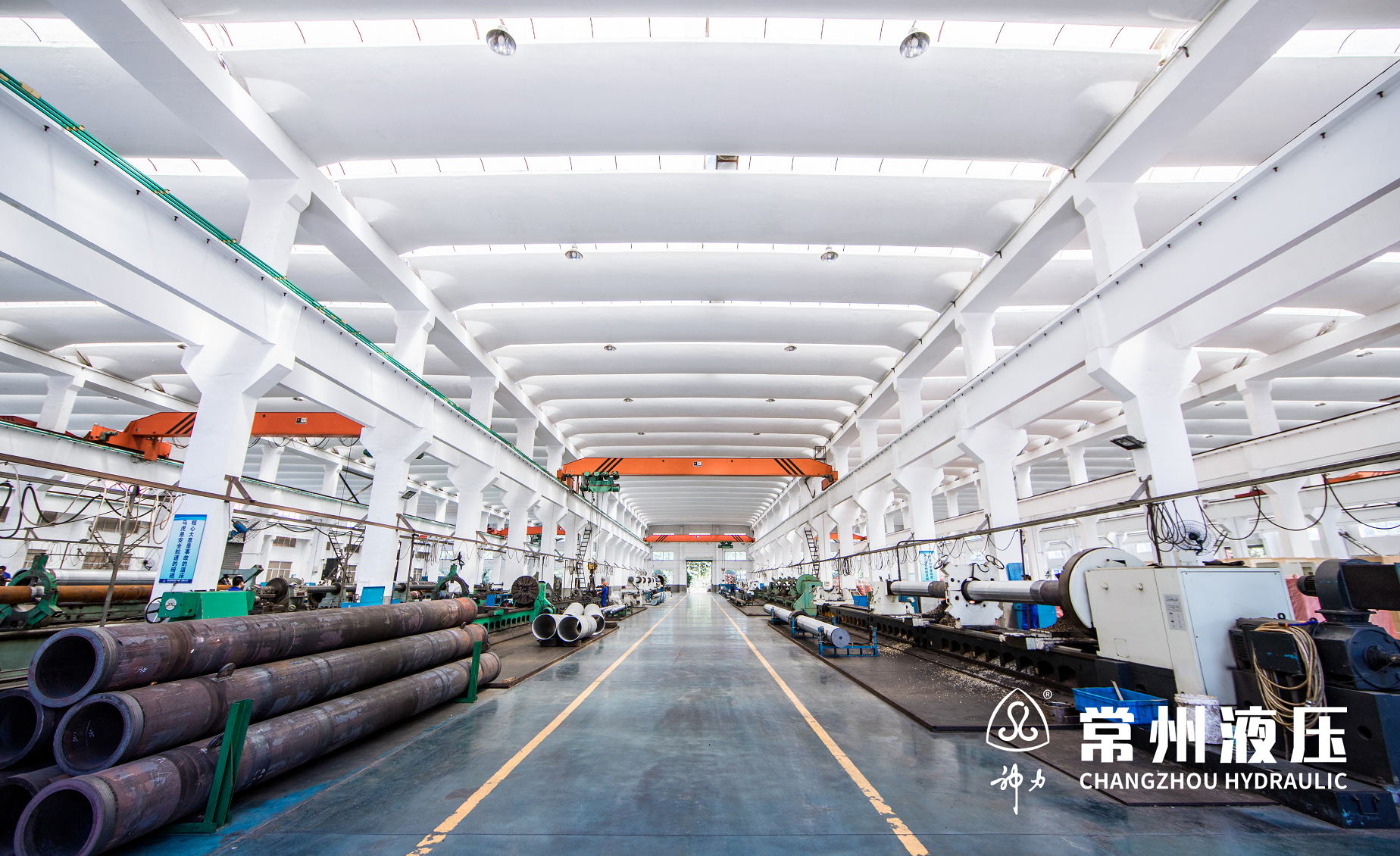
Payment, MOQ and delivery terms: the three questions buyers ask first
Is there a minimum order quantity?
The minimum order quantity is 1 unit. In practice that means a single cylinder can be ordered as a trial, as an urgent replacement, or as a validation unit before a program is placed, and it lets a buyer confirm machining, coating and documentation on one item first. For a long-term agreement, the more important question is not the MOQ but the call-off structure: whether quantity bands, price validity and delivery slots can be fixed for a defined period while individual releases remain flexible.
How does T/T payment work?
Payment is by T/T on a 50/50 structure. Payment milestones are the part of a supply agreement most often left vague, so the contract should state what each installment is tied to. Three points are worth settling in writing: what the first installment releases — material procurement, drawing release or a production slot booking; which documents must accompany the balance request, typically the packing list, commercial invoice and inspection report; and which party pays the remitting and intermediary bank charges.
The 50/50 split is the stated commercial term. How the two halves map to milestones is a contract decision, and buyers should make it explicitly rather than infer it from the proforma invoice.
Which delivery terms and port apply?
Quotations are issued on EXW, FOB or CIF terms, and shipments leave from Shanghai. The choice changes who controls freight and where risk transfers. On FOB Shanghai the buyer nominates the forwarder and takes over main-carriage cost and risk once the goods are on board; on CIF the supplier arranges carriage and insurance to the named destination port. Whichever term is used, the contract should name the port, the Incoterms version, the loading window and the documents released against payment.
Fixing the loading port also has an operational benefit across a repeat program: a forwarder that already consolidates from Shanghai can plan each cycle against the same origin, which reduces the chance of the goods missing a booked sailing because the origin changed.
What does “standard export packaging” cover in practice?
Standard export packaging is the stated packing method, and for large-bore or long-stroke cylinders it is worth confirming the specification in writing rather than assuming it. The points that matter are practical: whether cylinders travel in seaworthy cases or on cradles, how machined and coated piston rod surfaces are protected from moisture and abrasion in transit, which preservative is applied and whether it must be removed before commissioning, how lifting points and centre of gravity are marked, and how each package is labelled for the destination site.
Rod coating changes the stakes. For cylinders fitted with ceramic or HVOF rod coatings, transit damage is a handling problem rather than a manufacturing defect, and it is not always visible at the receiving inspection. Agreeing the packing method at order stage is cheaper than arguing about it after a claim.
Capacity and the 15–60 day delivery window
What supply volume can a long-term program plan against?
Monthly production capacity is 5,000 units, and annual supply capability is 2,400 tons. The company is based in Changzhou, Jiangsu Province, was established in 1990, and employs 316 people including an engineering team of 20. Around 40% of output is exported, with North America, South America, Western Europe, Eastern Europe, Eastern Asia and Southeast Asia listed as main markets.
For planning purposes, capacity and reserved capacity are not the same thing. A program that needs a batch of large-bore cylinders in a fixed month should ask for a slot commitment against that month, not a general statement of monthly capability, because a capacity figure describes what the plant can produce in total rather than what is still open when the order arrives.
Why does delivery range from 15 to 60 days?
Delivery is quoted at 15–60 days, and the span follows product type rather than queue position. The short end of the range suits standard cylinders built to an existing design and drawing. The long end belongs to non-standard designs, large-bore long-stroke units, special rod treatments such as ceramic or HVOF coating, and items that need documentation beyond routine inspection.
That is why a delivery band should never be accepted as an average. Two orders can both be quoted at “15–60 days” and still differ by weeks. Ask for the item's classification and a dated commitment inside the range, attached to a specific drawing revision and quantity. Lead time is product-dependent by definition, so the classification — not the band — is what belongs in the purchase order.
How can a buyer keep the window stable across repeated orders?
- Freeze the drawing revision. Attach the revision number to every order so a repeat cylinder cannot drift onto a different mounting or bore assumption.
- Share a rolling forecast. Even a rough twelve-month view lets the factory place long-lead items such as forged rods or large tube stock earlier.
- Tie inspection to production. Agree the inspection point and the document set before the batch starts, so acceptance does not add unplanned days at the end.
- Fix the shipping documents. Confirm the packing list, invoice and test report format once, then reuse it for every release.
- Schedule against the outage, not the order date. Work backwards from the installation window and set the loading date from there.
Which cylinder types belong in a long-term program
Three model families carry most of the repeat-order volume in gate control and heavy industry: double-acting cylinders, QHLY radial gate cylinders and hoists, and QPPY flat gate cylinders. Each behaves differently in a supply plan.
Double-acting cylinders do work in both directions, which is what makes them the default building block for controlled movement rather than single-direction push. In a gate application the return stroke is not decorative — closing the gate under control is the function that protects the structure.
QHLY radial gate cylinders and hoists serve radial (tainter) gates in water conservancy and hydropower. The cylinder and hoist operate as a set, so a repeat order should reference the original equipment configuration rather than the cylinder alone.
QPPY flat gate cylinders serve flat and plane gates, including emergency and rapid-drop duties where closing behaviour and holding force govern the design. Because the duty is safety-related, the acceptance test plan matters as much as the drawing.
Before scheduling either gate model, request the current drawing, the specification sheet and the acceptance test plan for that specific model and project. Model names identify a family; they do not by themselves confirm bore, stroke, mounting, coating or test criteria for a new duty point.
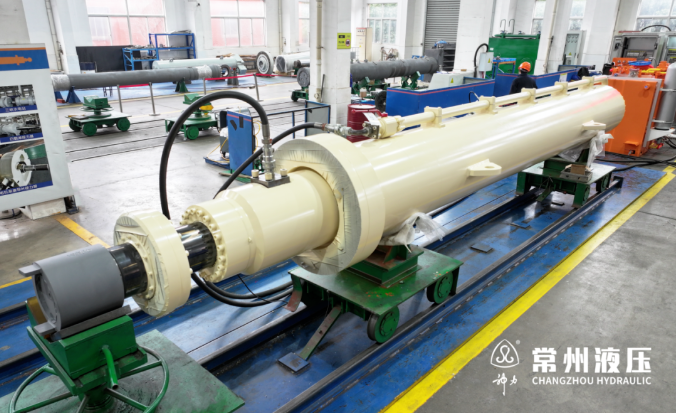
Quality control and acceptance criteria to fix in writing
Quality control is based on 100% test standards, and 100% testing before delivery is the stated acceptance criterion. That answers the yes-or-no question. The contract still needs to answer the practical ones: which tests, at what pressure, held for how long, recorded in what format, and who witnesses them.
ISO 10100:2020, which specifies acceptance and function tests for hydraulic fluid power cylinders, gives buyers a neutral structure for a factory acceptance test without tying the discussion to any one supplier's internal procedure. Using it as a reference point makes the test plan comparable between vendors and makes the report easier for an end user or insurer to read.
For marine and offshore duty, the design basis may also need to follow classification-society rules. DNVGL-CG-0194 requires a minimum buckling safety factor of 4.0 for standard calculations. That is a design requirement, not evidence that a particular cylinder has been certified, so ask separately for the certificate package and confirm which class and which scope it actually covers.
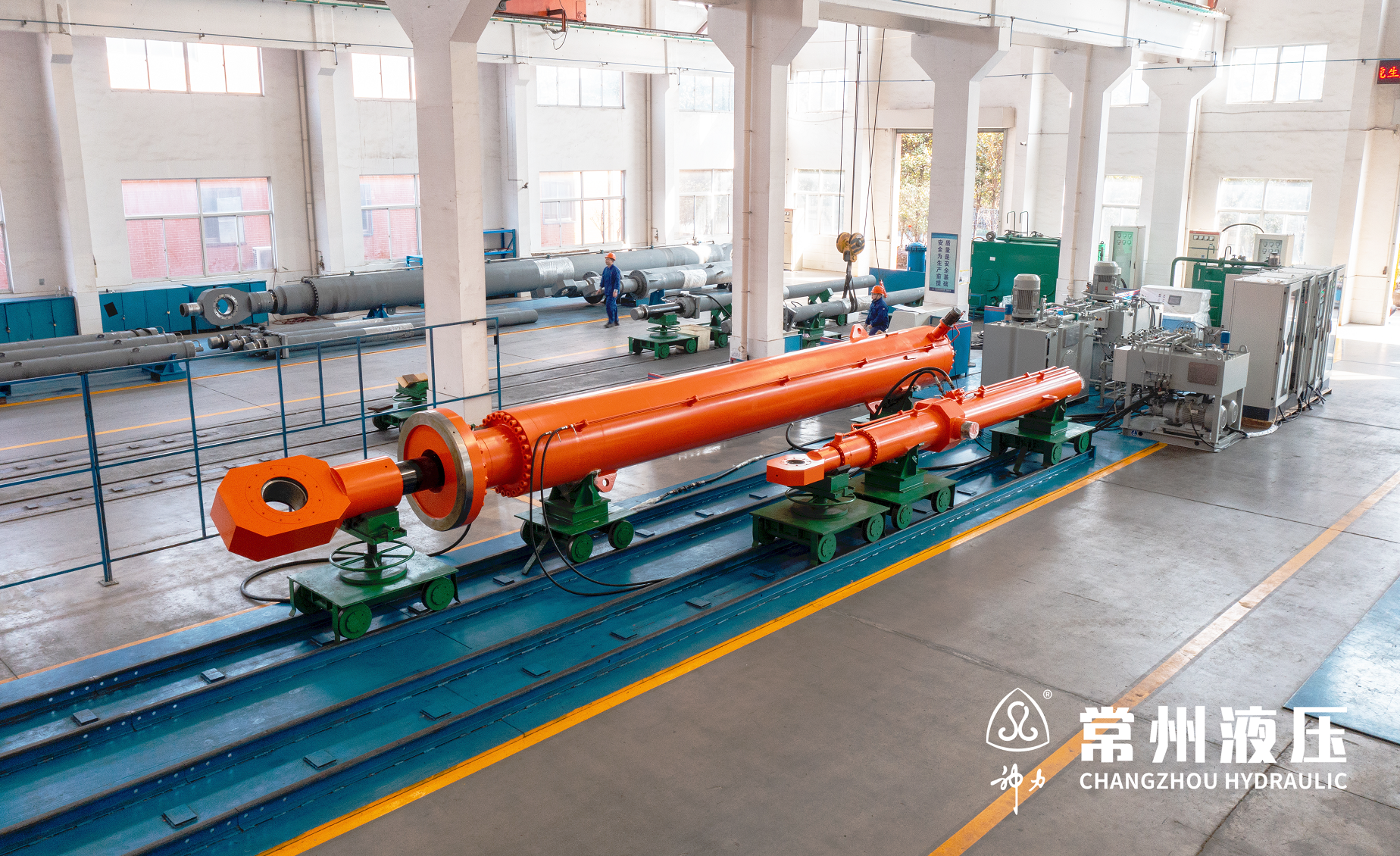
Commercial and execution terms at a glance
| Term | Stated position | What the buyer should confirm |
|---|---|---|
| Minimum order quantity | 1 unit | Whether call-off quantities and price validity can be fixed for a program |
| Payment | T/T, 50/50 | What each installment releases; documents attached to the balance |
| Delivery terms | EXW / FOB / CIF | Named port, Incoterms version, loading window |
| Port of loading | Shanghai | Forwarder nomination and cut-off dates for each sailing |
| Delivery time | 15–60 days, product-dependent | Item classification plus a dated commitment inside the band |
| Monthly capacity | 5,000 units | Reserved slot versus remaining availability for the target month |
| Annual supply capability | 2,400 tons | How tonnage allocation works for large-bore items |
| Quality control | 100% test before delivery | Test plan, report format, witness point |
| Origin | Changzhou, Jiangsu, China | Certificate of origin and any destination-specific documentation |
Step by step: from first order to a repeatable schedule
- Specify against a drawing revision. State bore, stroke, mounting, rod coating and duty cycle, and attach the revision that the order will be built to.
- Fix the commercial terms in the proforma invoice. MOQ, the T/T split, the Incoterm and the named port should all appear on one document.
- Ask for a dated delivery commitment. Convert the 15–60 day band into a specific date or date range for the item class and quantity ordered.
- Agree packaging and marking. Confirm case type, rod protection, preservative, lifting marks and labelling before production starts, not before shipment.
- Agree acceptance testing and the document set. Decide which tests apply, who witnesses them and which reports travel with the goods.
- Confirm the shipping documents and balance release. Match document release to the payment milestone so neither side is waiting on the other.
- Set the reorder trigger. Base it on the measured service interval and the outage calendar rather than on the previous order date.
Three planning scenarios
Hydropower gate program
Gate cylinders and hoists are replaced or extended during planned outages, so the binding constraint is the outage date. Order the drawing review early, reserve the production slot against the outage month, and treat the acceptance test as part of the critical path rather than an administrative step. The ten-year reference project described earlier is the relevant benchmark for how far ahead spare-part and documentation terms should reach.
Marine and offshore fleet maintenance
Docking windows are fixed and expensive to move. For marine and offshore cylinders, run two tracks in parallel: confirm the design basis against the applicable class requirement, and secure the documentation package well before the docking date. Rod coating choice belongs in this decision, because a corrosion-resistant coating specified at the design stage is a different procurement event from a coating added after a failed inspection.
Metallurgy and press lines
Press machine and metallurgical cylinders are typically replaced on a shutdown rather than on a failure, which makes them the easiest items to plan. The practical move is to hold one service exchange unit and to fix the reorder point on measured condition, not on calendar age. A single-unit MOQ supports this pattern, since a spare can be ordered and stocked without committing to a batch.
After-sales terms to define in the contract
This article deliberately does not state warranty periods, response times or service guarantees, because those are negotiated per contract and per product. What can be stated is the list of clauses a buyer should not leave open, whatever the agreed numbers turn out to be.
- Warranty period and its start date. State whether it runs from shipment, delivery, commissioning or first production use — the four can differ by months on a delayed project.
- Scope of cover. Define what counts as a covered defect (workmanship, material, coating adhesion) and what is excluded, such as seal wear, fluid contamination, misalignment during installation or unauthorised modification.
- Remedy route. Agree in advance whether a covered failure is repaired, replaced or credited, and who decides.
- Freight responsibility. Decide who pays return and replacement freight, and at which point responsibility transfers.
- Response and resolution timing. If timing commitments are given, define how they are measured and from which event — notification, diagnosis or receipt of the unit.
- Spare parts availability. Ask how long parts for the supplied model will remain available and what the lead time is for seals, rods and guide sleeves.
- Technical documentation. Confirm that drawings, test reports and maintenance instructions are handed over, in the buyer's working language.
- Inspection and traceability rights. Retain the right to witness testing and to receive material and heat-treatment records for safety-related items.
- Escalation path. Name the technical and commercial contacts on both sides, so a claim does not restart with a general enquiry.
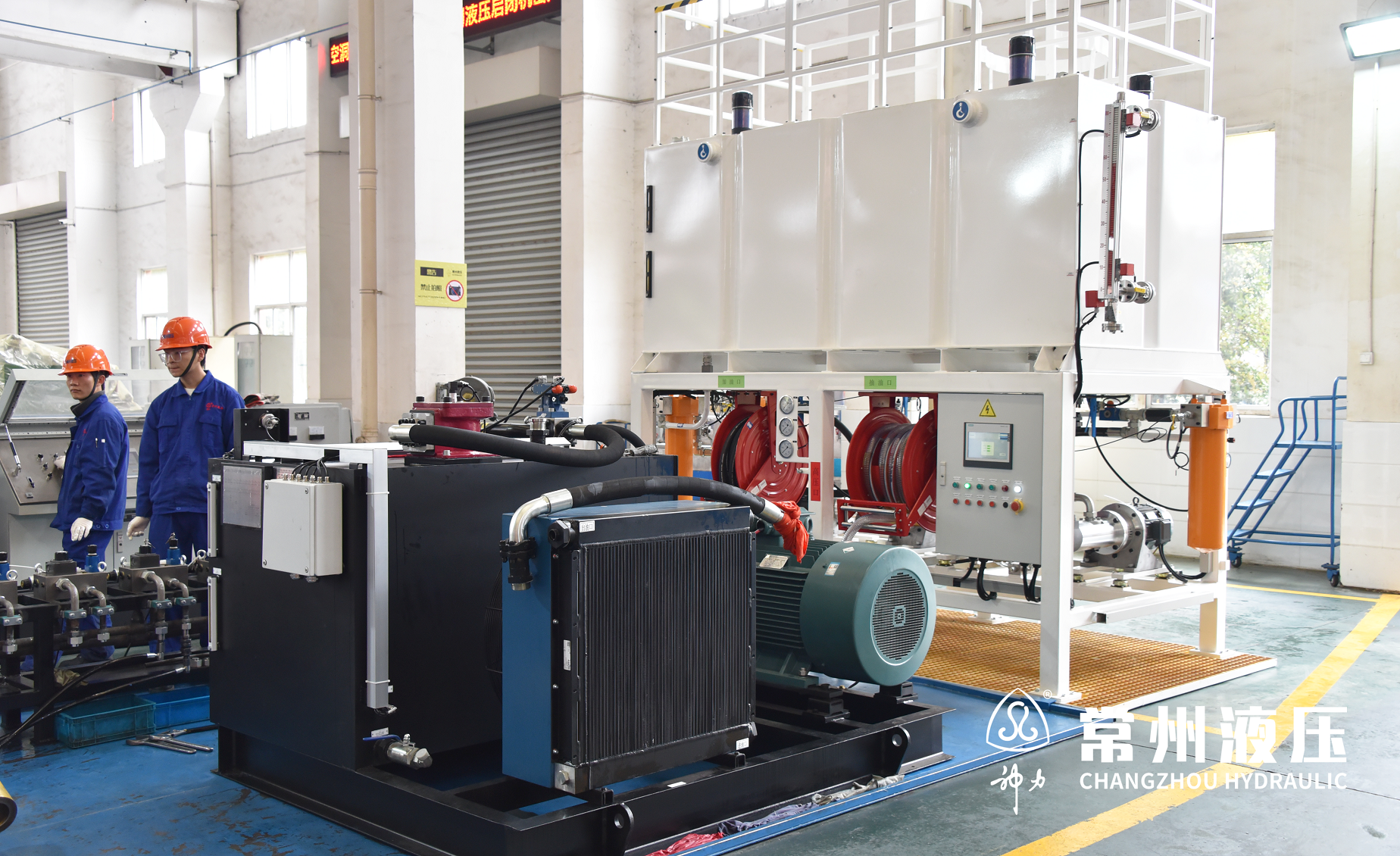
Frequently asked questions
What compliance documentation can be requested with a cylinder order?
Ask for the quality management system documentation, the material and heat-treatment records for stressed components, and the acceptance test report issued against the agreed test plan. For marine or offshore duty, request the certificate package separately and check the class and scope it names. The buyer's own end user or insurer usually defines what is sufficient, so confirm that requirement before production rather than after shipment.
Can non-standard cylinders be supplied for a repeat program?
Yes — non-standard customization is part of the manufacturing scope, alongside large-bore long-stroke cylinders, marine and offshore cylinders, servomotor cylinders and ceramic or HVOF coated piston rods. For repeat programs the discipline is to lock the drawing revision and the acceptance test plan with the first order, so later releases reproduce the same item rather than a similar one.
What drives the price of a long-term cylinder agreement?
Price is quotation-specific and is not published as a list figure here. The variables that move it are visible, though: bore and stroke, whether the design is standard or non-standard, rod coating and surface treatment, testing and documentation scope, packaging, and the Incoterm chosen. Because delivery ranges from 15 to 60 days by product type, short-lead and long-lead items in the same program should be priced and scheduled separately rather than averaged into one rate.
Can a single unit be ordered as a sample?
The minimum order quantity is 1 unit, so a single cylinder can be ordered for validation. Treat that unit as a documentation trial as well as a technical one: ask for the inspection report with it, confirm the packaging actually protects the rod, and use the result to finalise the acceptance criteria in the long-term agreement.
How is delivery scheduled for a multi-phase project?
Delivery is quoted at 15–60 days depending on product type, and shipments leave from Shanghai. For a phased project, give the factory the full release schedule up front, ask for a dated commitment per release, and group items by lead-time class so short-lead standard cylinders do not wait on long-lead coated or large-bore units. If a shipment date is critical, a short technical exchange early is usually faster than renegotiating later — the contact for that is listed with the company profile.
Conclusion
Long-term supply planning for industrial hydraulic cylinders comes down to converting a product quotation into an executable schedule. The stated terms give a workable starting point: a one-piece MOQ, T/T on a 50/50 structure, EXW, FOB or CIF terms with shipment from Shanghai, standard export packaging, 15–60 day delivery by product type, monthly capacity of 5,000 units, a 2,400-ton annual supply capability and 100% testing before delivery — all from a Changzhou-based plant established in 1990.
The work that remains is contractual. Attach a drawing revision to every order, convert the delivery band into dated commitments per item class, fix the acceptance test and its report format, and settle warranty scope, freight responsibility, spare-parts availability and escalation contacts before the first repeat release. Buyers who do that turn a sequence of separate purchases into a supply relationship that holds its dates.
For product scope, model drawings and packing details, the current company brochure can be downloaded here: Changzhou Hydraulic complete equipment brochure (PDF).
Have Questions or Need More Details?
Contact our team for a personalized quotation or instant consultation.
Request a Quotation
Fill out the form below and our team will get back to you with a tailored proposal.
WhatsApp Direct Chat
Prefer to chat in real-time? Message us on WhatsApp for instant assistance & quick answers.
- Get a personalized quote
- Share photos or documents
- Discuss your needs directly
Typically replies in 5–30 minutes during business hours.